Two-thirds through the decade: Living Dictionaries
We are two-thirds of the way through the decade, and it is a good moment to look back at how far Living Dictionaries has come. What began last decade with a few dozen dictionaries has become a platform that communities and linguists around the world use every day.
By the numbers
- 840 dictionaries are on Living Dictionaries, and 227 of them are public, listed on the dictionary map for anyone to browse. About 260 of them are wordlists from the Intercontinental Dictionary Series, whose import into Living Dictionaries is now complete. The series is a long-running project that recorded the words for the same list of about 1,300 meanings in more than 300 languages, so they can be compared side by side.
- Together they hold more than a million entries, about 143,000 audio recordings and nearly 23,000 photos. The number of recordings has nearly doubled since the end of 2023.
- There are 6,612 user accounts. 2,722 of them were opened this year alone, more than in all the years through 2024 combined.
- In September, 5,476 people visited Living Dictionaries, making 14,979 visits.
Every one of those numbers stands for the work of speakers, community members and researchers who decided their language deserved a place online. Thank you.
Here are a few of the words in those dictionaries, picked by their teams. Tap one to hear it, or open it in its dictionary.










A year of upgrades
Living Dictionaries has had its biggest year of improvements yet.
Local first. The whole dictionary now loads into your browser and your changes sync in the background. That makes everything faster: search and editing are instant, even on a slow connection.
Texts and sentences. Dictionaries can now hold stories, conversations and other texts, broken into sentences that link to their words. Audio plays along line by line, and timings can be lined up automatically.
Word families. Related words can be grouped into families that trace them back to a shared ancestor.
Maps and places. Entries, dialects and texts can be tied to the places where they are spoken, on maps that we now host ourselves.
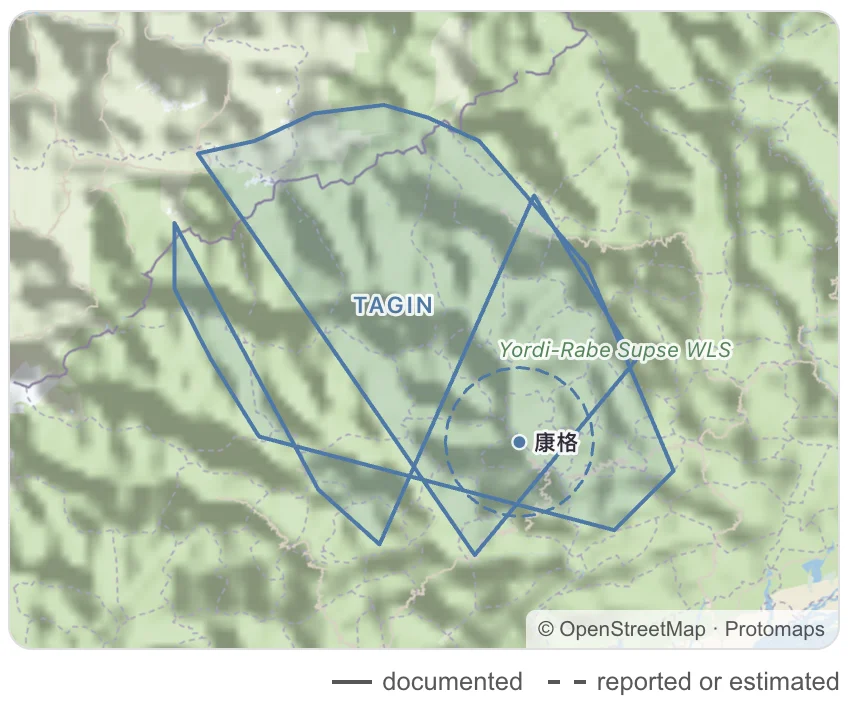
Where Tagin is spoken, on the Tagin Living Dictionary.
Try before you publish. Anyone can start a dictionary as a private sandbox, explore every feature, and publish when they are ready.
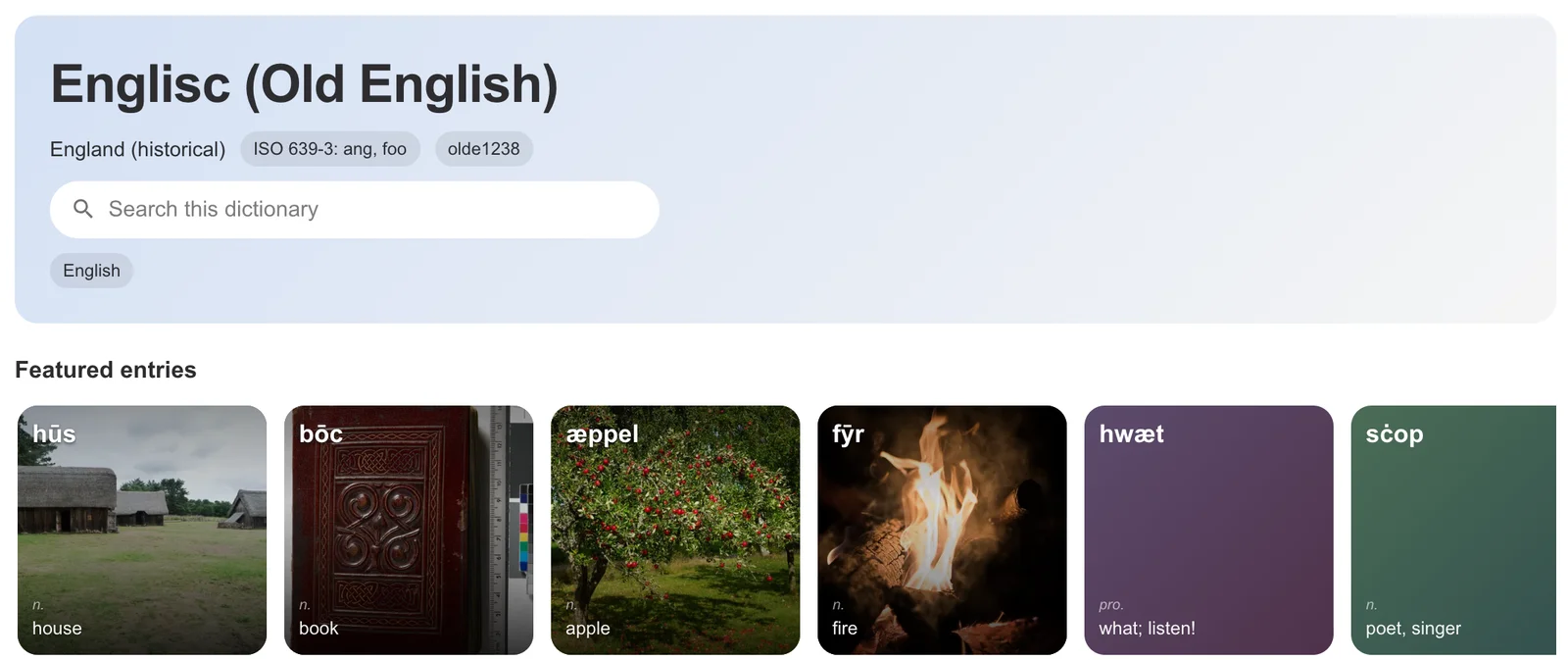
A new sandbox can start as a copy of Englisc, our Old English showcase, to see what a full dictionary looks like.
Help when you need it. A new FAQ answers the most common questions, with step-by-step guides.
A new home for Living Tongues
You are reading this on the rebuilt livingtongues.org. Twenty years of news, projects, publications and field reports are all still here, now faster to load, easier to read on a phone, and searchable from the search page. Our team page and the bibliographies of our researchers link straight to dictionaries, papers and recordings.
Working with AI agents
Much of this year's progress came from a new way of working. Our developers now build the Living Dictionaries platform with help from AI agents, which let a very small team ship far more than was possible before. Dictionary managers can use agents too: through the Living Dictionaries API, an agent can help import a spreadsheet of words, clean up entries or add translations, with the managers reviewing every change. In September alone, 35,900 entries were added to Living Dictionaries, about 31,000 of them through these agent-assisted imports.
Looking ahead
With the rest of the decade ahead of us, we are excited to keep building alongside the communities, linguists, students and partners who make Living Dictionaries what it is. If you would like to start a dictionary for your language, get started here, and if you would like to help this work continue, please consider supporting Living Tongues.