Englisc (Old English)
Featured entries

About
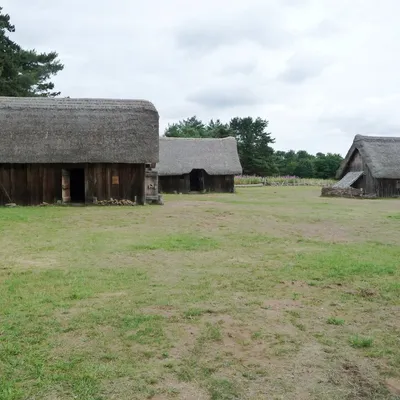
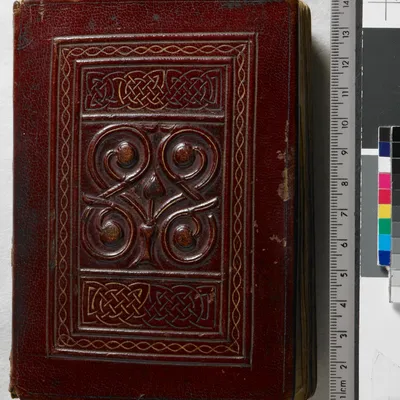
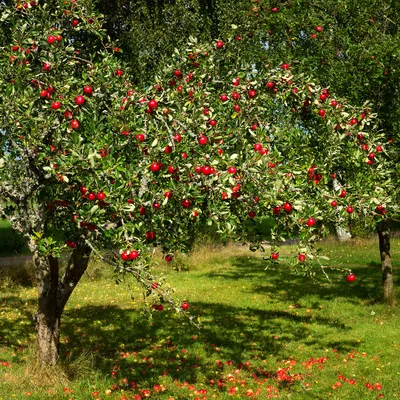
Englisc — the English of a thousand years ago Between roughly 450 and 1150 the people of what is now England spoke Englisc: the language of Beowulf, of King Alfred's translations, of the earliest English law codes, riddles, charms and sermons. It is English — hūs is house, cyning is king, bōc is book — yet a modern reader meets it as a foreign language. It declined its nouns, sorted its verbs into strong and weak, wrote with letters we have since lost (þ, ð, æ, ƿ), and had not yet borrowed the thousands of French and Latin words that arrived after 1066. This showcase dictionary is a small, hand-curated window into that language: about 400 headwords chosen for what they show — everyday words for kin, weather, war and worship, the poetic vocabulary of the Beowulf poet, and the little grammar words everything hangs on. Each entry carries a modern gloss and part of speech; most words of the connected texts (the opening of Beowulf, Cædmon's Hymn in both its West Saxon and Northumbrian forms, the Lord's Prayer, the Anglo-Saxon Chronicle's annal for 793 and the raid on Lindisfarne) link to their headwords; entries also gather into word families that trace a root across the lexicon, and into dialect areas mapped as deliberately broad teaching approximations of the written varieties. Pronunciation is reconstructed and spelling varies from manuscript to manuscript, so nothing here claims to be a comprehensive or authoritative edition. It exists to show how a Living Dictionary holds headwords, texts, audio, photographs, word families, grammar and scholarly citation together for one language — and to be a safe playground for anyone trying the platform. Sources and reuse The lexicon was checked against the public-domain Bosworth–Toller Anglo-Saxon Dictionary (1898/1921). The medieval texts are public domain; the short English translations were written for this demo. Audio and photographs come only from Wikimedia Commons under the item-level licences shown in their attribution.…
Read moreGrammar
Old English spelling is more phonemic than modern English spelling. þ and ð represent dental fricatives; æ is a front vowel; ċ and ġ may mark palatal pronunciations in normalized teaching editions. Macrons in this demo mark long vowels but are editorial, not manuscript punctuation.
Read moreRecently added
Using this dictionary
Living Dictionaries, “Englisc — Old English” showcase dictionary. Lexical data after Bosworth & Toller (1898/1921); item-level media attribution appears with each asset. 2026. Englisc (Old English) Living Dictionary. Living Tongues Institute for Endangered Languages. https://livingdictionaries.app/englisc
Want to reuse this content in an app, course or publication? Ask the dictionary's team first — attribution doesn't replace permission.