About Living Dictionaries
Living Dictionaries are mobile-friendly web tools that support endangered, under-represented and diasporic languages.
Led by community activists around the globe, Living Dictionaries are collaborative multimedia projects that help languages survive for generations to come.
Originally known as “Talking Dictionary” software, our platform was first launched in 2006 by Living Tongues linguists Gregory D. S. Anderson and K. David Harrison. In 2020, Living Tongues Institute updated the name of the tool to Living Dictionaries.
Current Dictionary Features
Build with the API & AI Agents
Every Living Dictionary can be read and written through our API. Dictionary managers create per-dictionary keys — a read key for pulling data out, and a write key for adding or updating entries — so the data always stays under the community's control.
This means you can point an AI coding agent (like Claude, ChatGPT, or Gemini) at your dictionary to bulk-import a word list, clean up existing entries, or build custom apps, printable dictionaries and learning tools on top of your data. Anything a person can edit by hand, an agent can do through the same API — and every change is recorded in the dictionary's history, attributed to the agent and the person whose key it used.
Development Roadmap
Why document endangered languages?
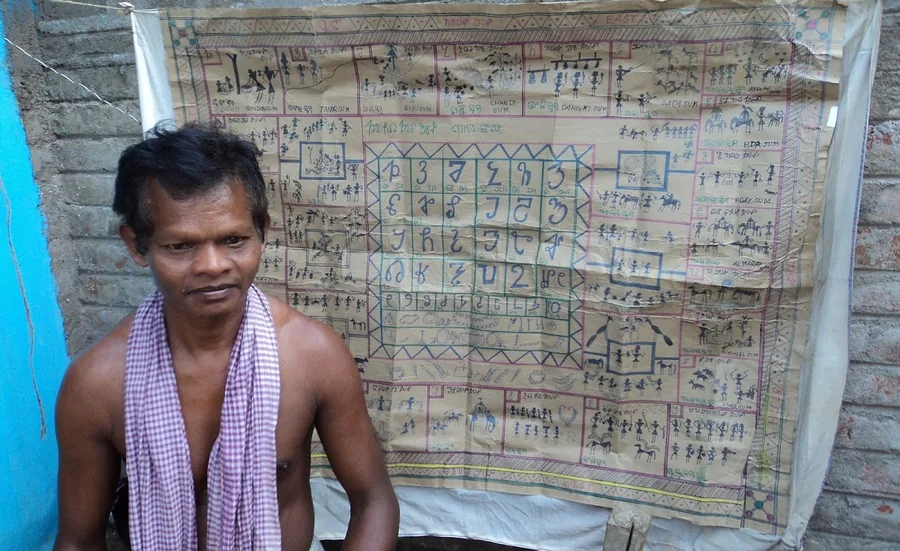
Languages are humanity's living history; they encode centuries of ancestral wisdom related to the environment, local culture and much more. Language is the vital, creative lens through which we perceive the world and express ourselves. There are over 3,000 threatened and endangered languages in the world, and it is up to our current generation to address this urgent problem before it's too late.
Not only is it important to scientifically document and preserve endangered languages, but from an educational standpoint, learning one's heritage language is a boost for communities who wish to conserve and celebrate their cultural identity, locally as well as internationally. Knowing about one's linguistic and cultural origins has significant, positive health impacts, and this translates to better well-being of the community in the long-term.
What is Living Tongues Institute for Endangered Languages?
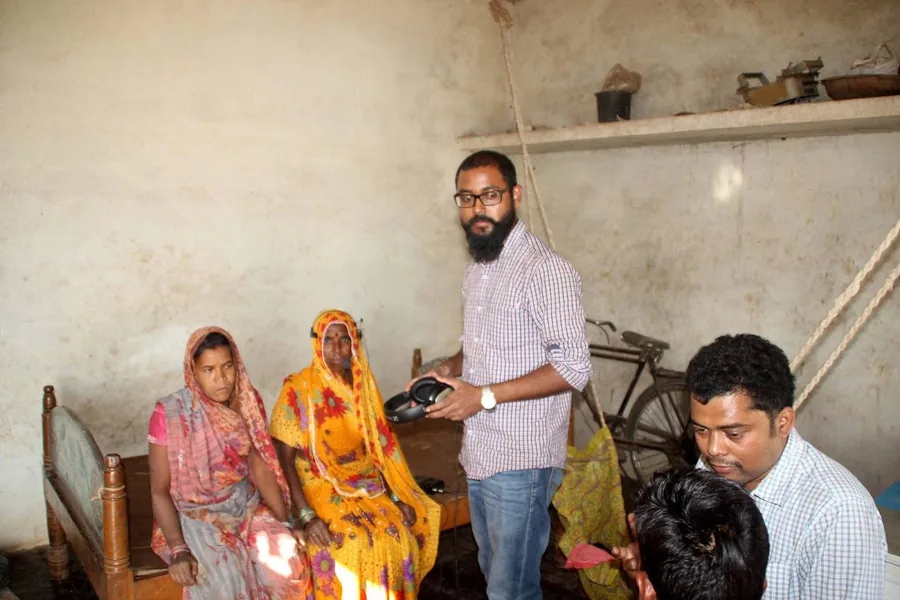
Living Tongues Institute for Endangered Languages is a leading research organization dedicated to documenting endangered languages. Founded by linguist Dr. Gregory D. S. Anderson, Living Tongues Institute is a non-profit research institute based in Salem, Oregon, with remote researchers and collaborators located around the globe.
With nearly two decades of fieldwork experience, researchers at Living Tongues Institute for Endangered Languages have the skills and methods in place to help communities document, protect, and promote their languages.
Translators
- Assamese: Palash Nath, Luke Horo, Kapil Medhi, Dr. Seuji Sharma, Dr. Gitanjali Bezbaruah, Biren Baruah, Khagendra Nath Medhi, Pranab Sharma, Dhanmani Baishya, Chan Mohammad Ali, Rahul Choudhary
- Bengali: Sumedha Sengupta, Prof. Arun Ghosh
- French: Anna Luisa Daigneault
- Hebrew: Dana Melaver, Daniel Bögre Udell
- Swahili: Michael Karani
- Hindi: Ashwini Parmar, Luke Horo, Bikram Jora, Prof. K.V. Subbarao
- Oriya: Anup Kumar Kujur, Panchanan Mohanty
- Portuguese: Crisofia Langa da Camara
- Russian: Denis Tokmashev
- Shona: Reggemore Marongedze
- Spanish: Anna Luisa Daigneault, Amanda Chao Benbassat, Mónica Bonilla Parra
- Malay: Nur Hidayah Binte Sunaryo
- Zulu: Mthulisi Ncube
- Italian: Iara Mantenuto
- Mandarin: Peng Dong, Joy Wu
- Tamazight: Radia Sami
- Vietnamese: Huy Phan
- Indonesian: Yustinus Ghanggo Ate
Interns (Living Tongues Institute)
Ashlie Devenney, Thorin Engeseth, Ariel Rabkin-Meyer, Ella Hannon, Cassie Gritton, Peyton A. Nesler, Emilie Erbland, Kyra O’Connell, Louis Fillman, Liam Marshall-Butler, Shuangqi (Joy) Wu, Catherine Huang, Molly Cutler, Luke Strom, Sydney Louchard, Alexis O'Connor, Cassidy Parong, Chloe Bourdon, Sichen (Larry) Lyu, Tali Tukachinsky, Valeria Macias, Evelyn Ho, Barbara Lourenco Oliveira Moreira, Adviye Pelin Teberoğlu, Sophie Shields, Anthony James Brandy, Rammi Quah, Alexandra Winslade, Gabriela Collaço Horton, Vikram Nagapudi, Sasha Viola Fennimore, Polly Vishner, Loren Schneider, Kiasah Izzati, Manuel Aguilera, Maksymilian Rębisz, Rachel Mattie, Aarushi Asthana, Akano Johnson, Selena Syrett.
Help Us Launch More Living Dictionaries
With your help, we can continue to improve our software and make it available for any community that wishes to create their own Living Dictionary. Donate today and make an impact!
Donate