Newsletter: The gift of linguistic diversity
The power of Living Dictionaries
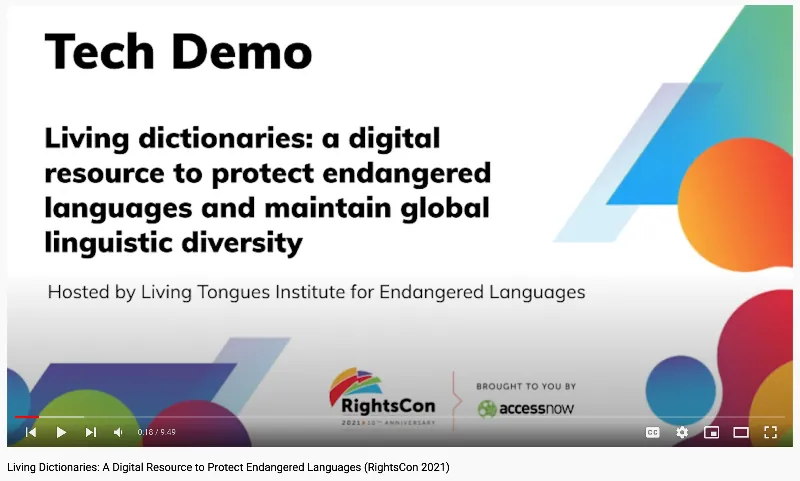
Welcome to all our new subscribers! Many of you heard of us through our Living Dictionaries website, which now houses over 250 public and private dictionaries for minority and endangered languages all around the globe. It is an online dictionary-builder where activists can build their own digital tools from the ground up. All language data belongs to the communities themselves. In news, to assist dictionary managers in downloading their content, we just rolled out an “Export Data” feature that we are really proud of!
In 2021, we did a lot of outreach related to building Living Dictionaries. We conducted 11 public Zoom webinars and countless one-on-one tech support meetings with language activists around the world. We collaborated with citizen-linguists to curate and upload dictionary content for languages such as Tutelo-Saponi Monacan, Kalanga, Kalinago, Owé, Olùkùmi, Sora, Woccon and many others that are coming out soon. If you started a dictionary with us this year, thanks for being part of our online community!
The platform is growing rapidly. With your help, we can help protect language diversity world-wide. We are raising funds to cover web development and tech support costs. Please donate today and give the gift of language access and diversity to future generations!
Looking back on 2021
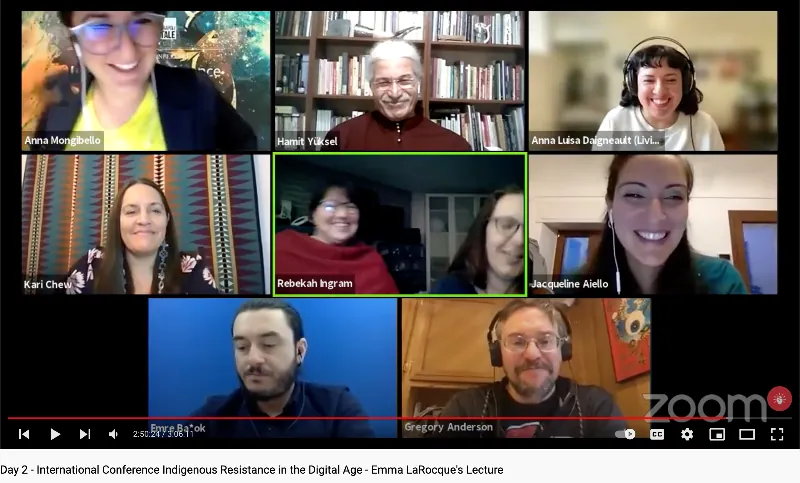
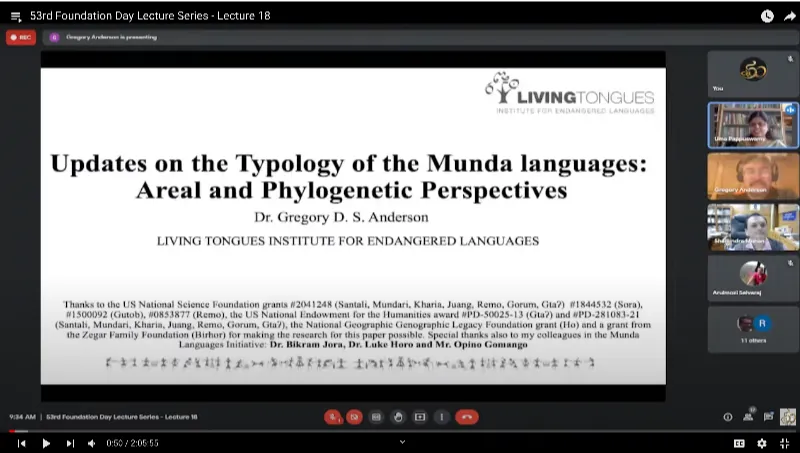
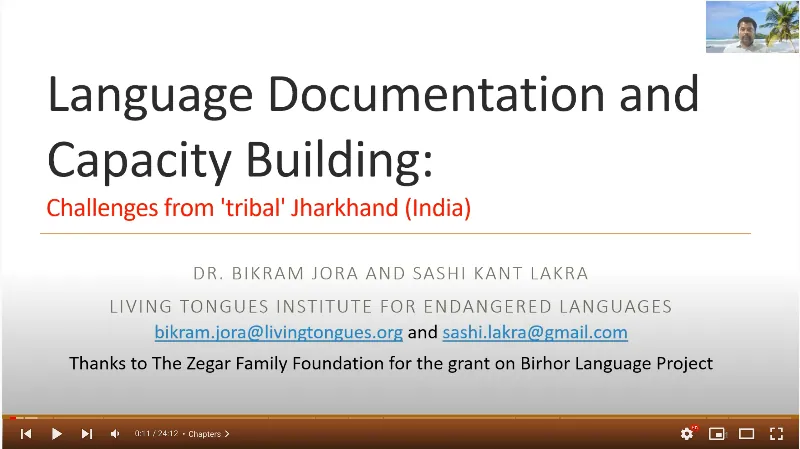
With many conferences going virtual in 2021, it was a good year for researchers at Living Tongues Institute for Endangered Languages to participate in virtual gatherings around the world. Our teams presented work at 14 fascinating scientific conferences and language activism events!
From the documentation of endangered Munda languages in India, to the creation of Living Dictionaries for under-documented languages around the world, we were very active in disseminating the results of our ongoing research projects. See the full list of conferences and view videos.
The Birhoɽ Language Documentation Project
Over the past three years, we have been working closely with Birhoɽ tribal communities in India to document their language for the first time, as well as create an ethnobotanical survey and launch the first-ever children’s book in the Birhoɽ language! We are also publishing a trilingual Birhoɽ-Hindi-English dictionary in early 2022.
Our work documenting the traditional plant knowledge of the Birhoɽ resulted in a 159-page study of 94 local plant species as well as their Birhoɽ names and various types of uses. This study deals with the cultural traditions of the Birhoɽ tribe, how they manage and wield knowledge of their local ecology, and specifically how they use some of the many plants found in their area of habitation. Physical copies will be available in India in early 2022! Read more about this book on our website.
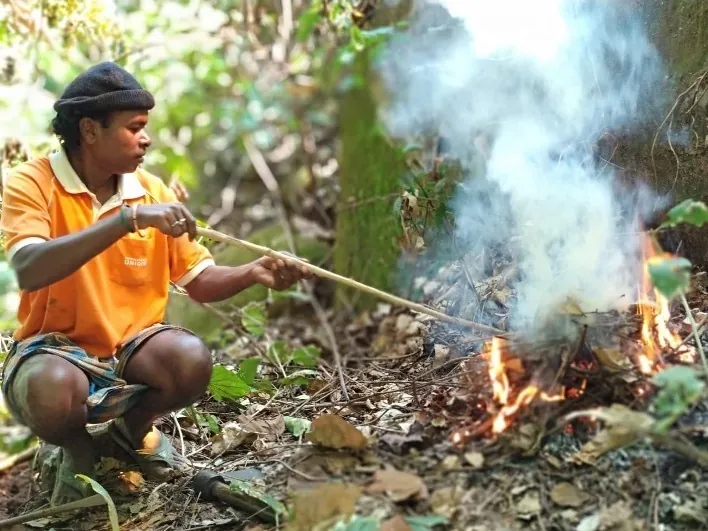
The Birhor people’s process of roasting and eating local tubers such as “kukuʧ haser” (Dioscorea villosa) and “patal kõhɽa” (Pueraria tuberosa DC) is an important local practice. After digging (“laj”) to extract tubers (“da”) out of the ground, the Birhor clean (“sapʰa-em”) the tubers to remove dirt. Then they proceed to roasting (“seŋgel-re lo-kete esin-em”) them. A small fire is made using twigs and dried leaves (“sakam”) to roast the tubers.
Documenting endangered Jewish languages
The Jewish Language Project, Living Tongues Institute for Endangered Languages and Wikitongues have teamed up to safeguard Jewish languages around the world. In 2,000 years, there have been dozens of Jewish languages, each reflecting unique histories of migration and resilience. However, Jewish linguistic diversity was nearly destroyed by migrations and violence in the 20th century, as ancient communities across Europe, Africa, and Asia were displaced.
We are raising funds to record and safeguard oral histories by fluent speakers, make audiovisual recordings publicly accessible online through YouTube, edit and caption videos so they are multilingual and useful for educational purposes, collect data to create new Living Dictionaries, as well as train citizen-linguists and language activists to continue this documentation and revitalization work for years to come.

As this short film by Alan Niku demonstrates, some grandparents and grandchildren are teaching and learning endangered languages, such as Ladino/Judeo-Spanish (Ottoman Empire), Judeo-Arabic (Syria), Judeo-Yazdi (Yazd, Iran), and Hulaulá (Sanandaj, Iran). Much work remains to document these languages.
Thank you, interns!
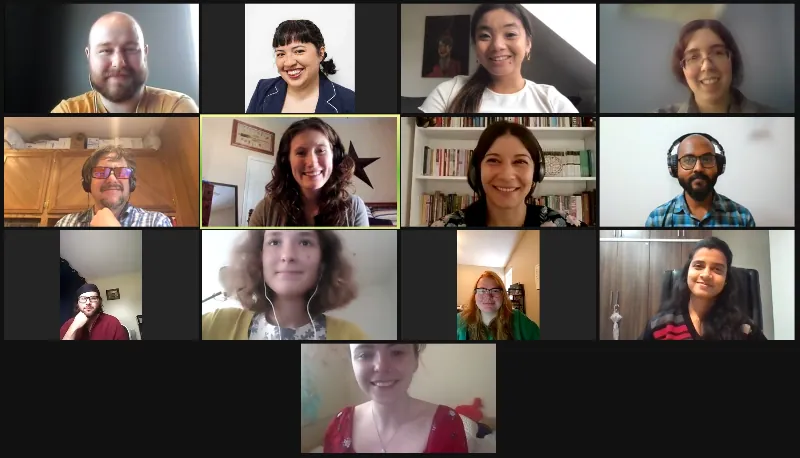
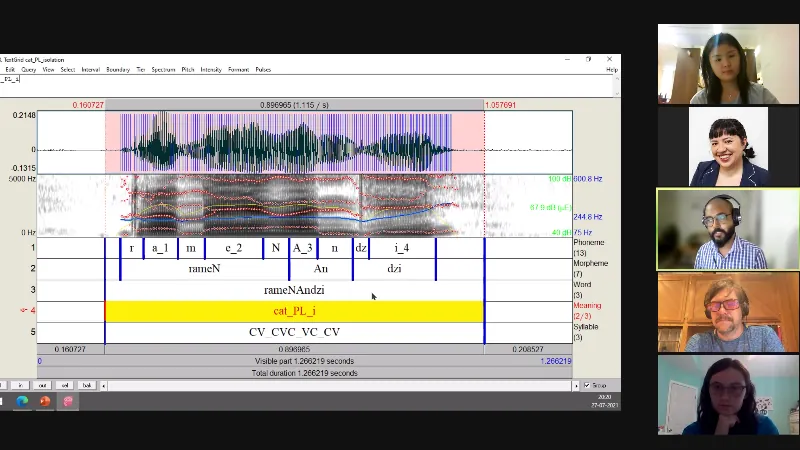
Training the next generation of endangered language activists and scholars is important to us. In 2021, we welcomed six different intern cohorts working on the Sora language documentation project as well as on the Living Dictionaries platform, several volunteer research assistants as well as a team of phonetics researchers in India, a new web developer and a web development intern. Here are a couple of glimpses of our intern teams! Meet our interns and assistants.
Featured video: Sora music and culture

In 2021, we produced this multilingual video entitled “The Traditional Musical Instruments of the Sora People”. It was well received by Sora community members and it now has over 22k views on YouTube! We hope you enjoy it.