Newsletter: 2020, the year in endangered languages
2020: our year in review
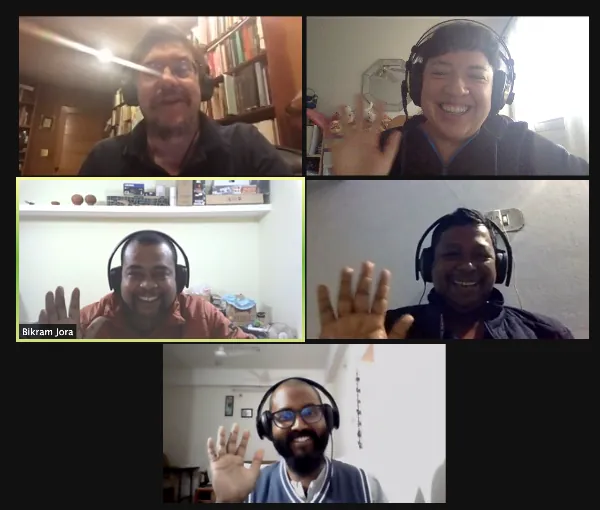
Season’s greetings from the Munda Languages team: Greg, Anna, Bikram, Opino, and Luke! This year, we spent countless hours on Zoom collaborating remotely.
Living Dictionaries: a growing platform
Despite the hardships our team members and collaborators faced in 2020 (wildfires & illness), we pulled through. And, some unexpectedly good things happened to us during the pandemic. For example, we saw a huge upsurge in the number of language activists using our new and improved online dictionary-building platform: Living Dictionaries.
Our community of dictionary creators grew by over 200% in 2020 — how amazing is that? It has been incredible and heart-warming to see so many dedicated people actively working on endangered language revitalization projects during the pandemic. This means two important things:
- We are making substantial progress towards achieving our dream of helping endangered language communities create their own much-needed language resources.
- Interest in our work is growing rapidly, and we need your support! Please donate today to help us keep our projects running for years to come.
2020 was the year where we hunkered down and worked on improving our software. We released major updates to the Living Dictionaries web platform. It’s a tool that easily allows people to create their own online dictionaries with text entries, audio recordings and images (and videos coming soon). We have improved the search functionality, added new interface languages, and provided tech support for scores of new dictionary projects that are now underway on our platform.
Since so many language activists began new digital projects with us in 2020, we invited them to participate in online workshops with us. We listened to their questions, and discussed the future of the web app. We have a detailed roadmap of where we want to take this tool and we have shaped it based on community needs and requests. View one of our tutorials below.

Our latest web tutorial: How to Create a Living Dictionary.
We are proud of what we have accomplished this year with Living Dictionaries, and are hopeful that we can make a real difference in protecting the future of language diversity. We are committed to maintaining and expanding this platform for decades to come.
Donate today to help us collaborate with more communities!
The Birhor Documentation Project
One of our major projects this year has been about creating resources for the Birhor language, an endangered Munda language spoken in India. “Abun Ari Re” (Our Surroundings) will soon be the first-ever children’s book published in Birhor, an endangered Munda language spoken in India. We are in the final production stage and will be printing many copies soon, for educational use in Birhor communities. It is trilingual in Birhor, Hindi and English.
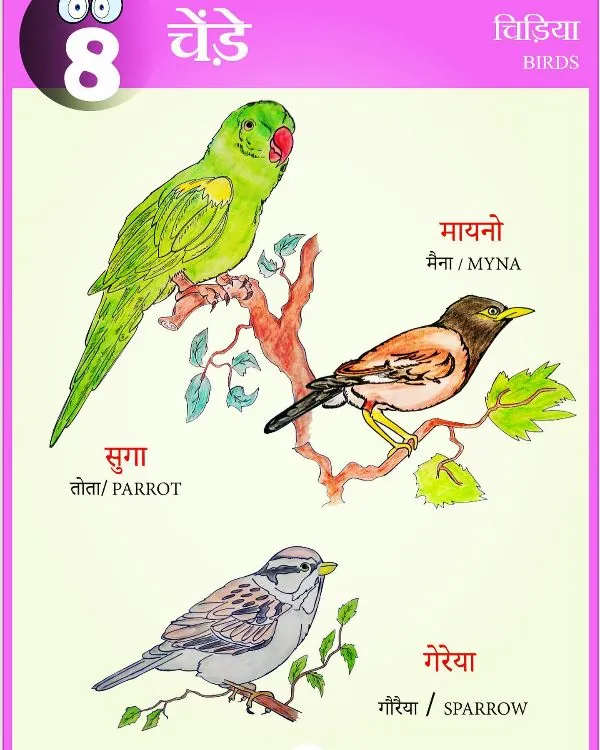
Draft of a page from “Abun Ari Re” that features local bird species.
Finishing this project through remote collaboration has not been easy, but well worth the challenge. This project has been made possible by ongoing work by Living Tongues linguists, Birhor speakers, and indigenous artists in India (with support from the Zegar Family Foundation).
See our website for full credits and more details.
Sora film project: The House of the Lurni Spirit
Last year, we received a National Geographic Citizen Science Grant to produce a series of short films in the Sora language of Odisha State (India) with subtitled versions in both English and Hindi. The content of the films will cover vanishing traditional knowledge domains of the Sora tribal people. We are thrilled to share a short video segment from this project.

The House of the Lurni Spirit: Documenting Stories of the Sora Tribe
While the Sora people’s cultural practices were thriving a generation ago, all are severely threatened now due to state-mediated environmental, education and economic policies that impact the Sora people. The rapid advance of Christian and Hindu religious practices is also replacing the original Sora animist religion.
Living Tongues project coordinator and Sora scholar Opino Gomango has spent months recording interviews, documenting cultural practices among the Sora and curating the footage for the final series of films. This will be one of the first series of films made primarily by a Sora person for an audience of Sora communities.
Read more about this project and see full video credits.
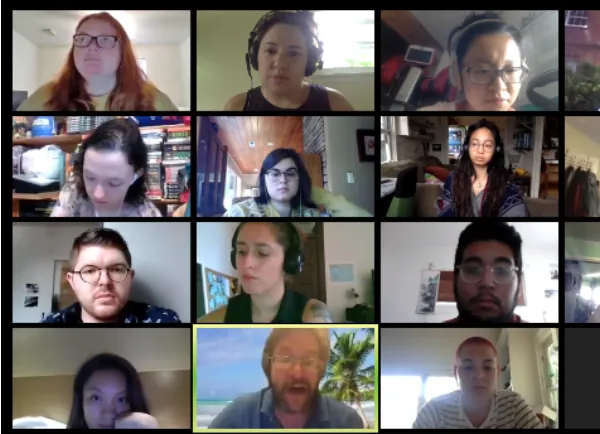
Shout-out to the seventeen Living Tongues interns around the world who volunteered on the Sora documentation project in the summer of 2020. We appreciate you!
Plans for 2021
While in-person fieldwork may not be on the table for a while, we have many exciting publications, projects and remote collaborations in the works. Here is a glimpse of what we are up to:
- We will continue teaching regular webinars and will be launching the Living Dictionaries interface in Hebrew, Arabic, Hindi, Assamese, Swahili, Russian (and other tongues) to accommodate language activists in as many regions of the world as possible.
- In order to promote the Living Dictionaries platform, we are presenting at several conferences focused on minority and threatened language issues.
- In particular, we will focus on expanding our impact in Africa by working remotely with Living Tongues Fellows in Zimbabwe and Nigeria.
- We are working with Wikitongues on a project documenting endangered Jewish languages around the world, as well as launching our latest edition of The Language Sustainability Toolkit with them.
- We are collaborating with the Endangered Languages Project to produce “Word of the Day” social media posts in endangered languages.
- Our research will appear in linguistics publications world-wide, and we will be featured in various media outlets. Stay tuned! More to come.
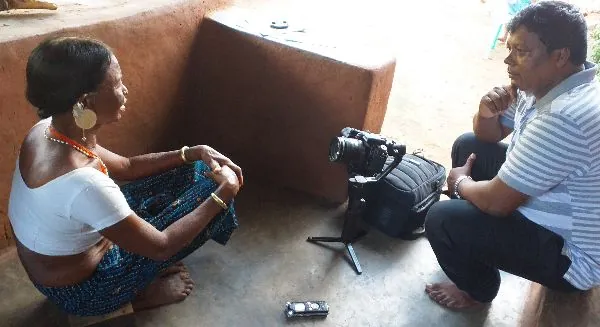
Living Tongues linguist Opino Gomango (right) interviewing Sora speaker Eranti Dolbera (left) in October 2019.
At Living Tongues, our mission is to ensure language survival for generations to come. We support speakers who are saving their languages from extinction through activism, education, and technology. With your help, we can protect language diversity world-wide. Bring voices to the future by donating today!