Garifuna
Featured entries
About
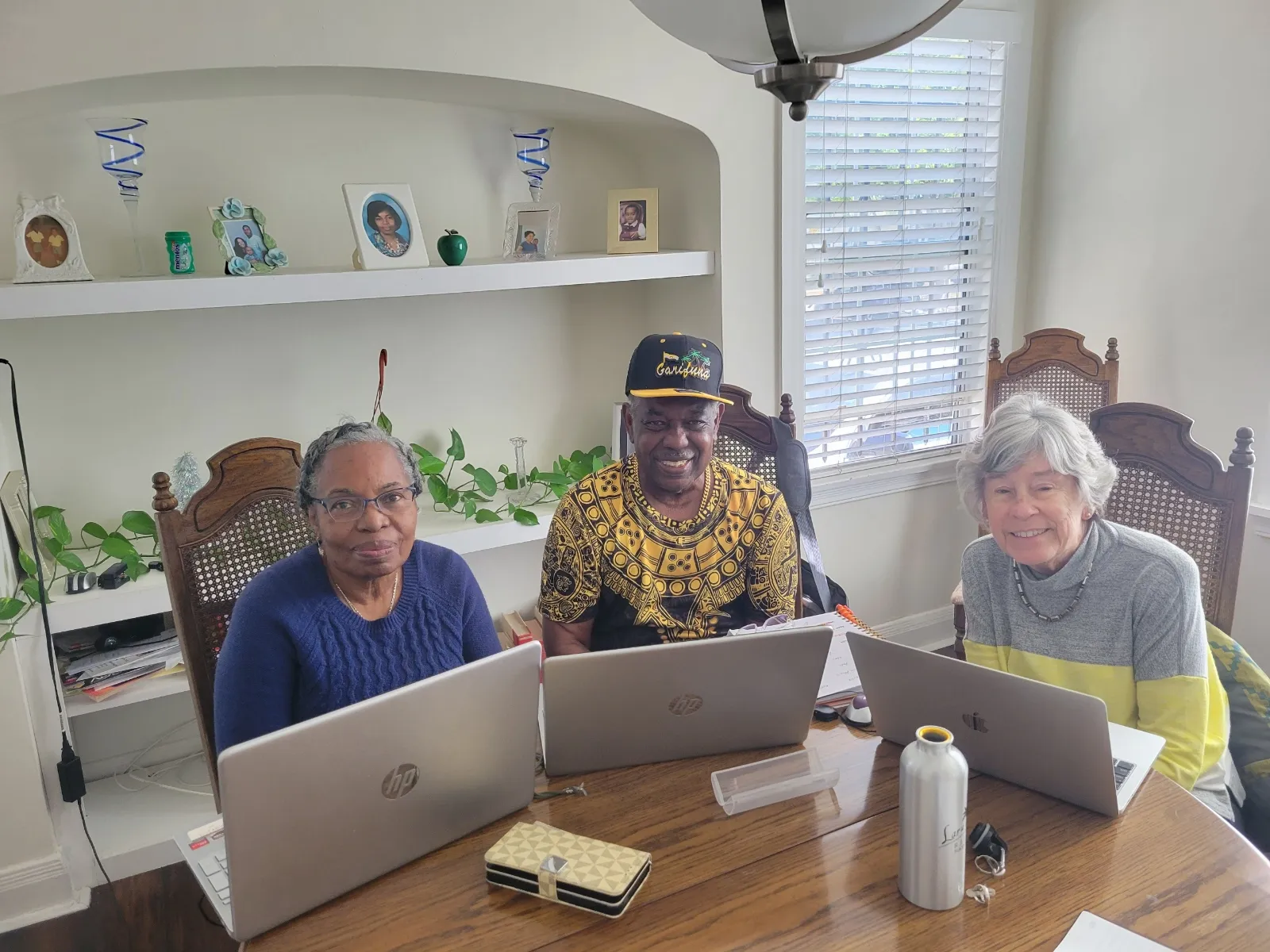
This is a Living Dictionary of Garifuna, an endangered language of the Arawakan (or Arawak) language family primarily spoken in Belize, Honduras, and Guatemala but with many speakers in the United States. Our dictionary primarily reflects the speech of speakers from Dangriga, Hopkins, Punta Gorda, and Seine Bight, Belize. While we do check other sources, for the most part the dictionary includes only words and meanings our contributors know well. The dictionary is being prepared by Virginia Martha Martinez-Ciego, Ben Flores, and Pamela Munro, with input by Anita Lambey-Martinez and Allen Munro, and additional contributions from other members of the Los Angeles Garifuna community study group, including Jo Baker, Lisa Carlos, Shantel Garcia, Marva Lewis, Luciana Lino, and Jessica Palacio. We gratefully acknowledge help with Spanish from Michael Galant. The dictionary uses a new orthography for Garifuna based closely on traditiional sources. Differences include the following: long vowels are written double, stress is written on every word except for particles (clitics) and auxiliaries, the stressed vowel ü is written û, and we do not write ñ (which in other orthographies inconsistently represents vowel nasalization in the environment of y). The same orthography is also used in the textbook Adímureha Wamaa Garífuna (Let's Speak Garifuna) (in continual revision) by Pamela Munro, Virginia M. Martinez-Ciego, Anita Lambey-Martinez, and the late Maurice Lopez, which has been used in classes at UCLA and in the current community class. We hope this dictionary will be useful to Garifuna language learners and others interested in the language. For more about how things appear in the dictionary, please see the Grammar section on this site. If you have questions or comments, would like to suggest additional words we should include, or know additional meanings or pronunciations of words in the dictionary, we'd love to hear from you — please write to Pam Munro at munro@ucla.edu. We…
Read moreGrammar
Garifuna is a VSO (verb-subject-object) language with complicated verb morphology and sex gender (marked here as "Noun class") for all nouns. At least one example is given for most words to illustrate their use in natural contexts. The main entry for most verbs is the basic stem (used, for example, to mention events that occurred yesterday or habitual states or conditions). The prefixable, negative, and a-stems are listed under "Morphology". The a-stem is cross-referenced in most cases (unless we forgot, or unless it is homophonous with the basic stem). Nouns are listed in the unpossessed form, with their possessed stems listed under "Morphology". Our dictionary entries use the following abbreviations in addition to the regular ones employed by the Living Tongues platform: a-st = a-stem (verb), bas = basic verb stem, f = feminine, m = masculine, neg = negative verb stem, pl = plural, poss = possessed noun stem, prf = prefixable verb stem. A few entries in the dictionary are followed by **. These are words we have questions about.
Read moreRecently added
Using this dictionary
Ben Flores, Virginia M. Martinez-Ciego, and Pamela Munro, with Anita Lambey-Martinez, Allen Munro, and Michael Galant. 2026. Garifuna Living Dictionary. Living Tongues Institute for Endangered Languages. https://livingdictionaries.app/garifuna
Want to reuse this content in an app, course or publication? Ask the dictionary's team first — attribution doesn't replace permission.