Htanaw
About
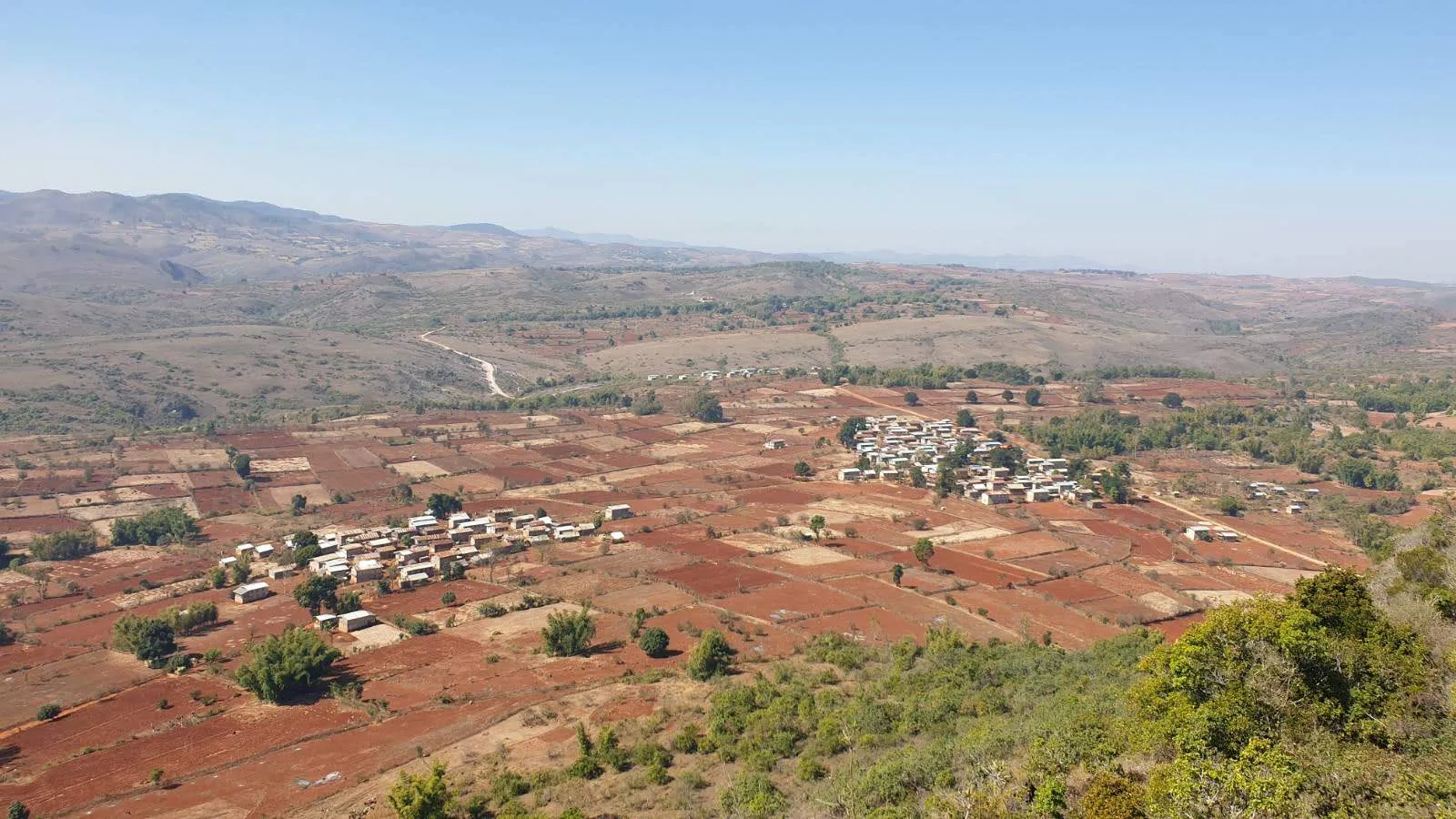
This dictionary is a joint effort of native speakers and international linguists. It is part of a collaborative documentation project of Htanaw, an endangered Austroasiatic language of southern Shan State, Myanmar. The project was initiated in 2019 in Kalaw, Myanmar, and is maintained by native speakers together with an international team of linguists based in Thailand and Switzerland. The dictionary is managed by: Mathias Jenny, researcher at Chiang Mai University, Thailand; Han Tin, Chiang Mai University/Htanaw Youth Group; Rachel Weymuth, Myanmar Cultures and Languages Support (MCL), Switzerland; Alexandra Herdeg, Myanmar Cultures and Languages Support (MCL), Switzerland/University of Zurich, Switzerland. Additional contributors from the language community include Kyaw Zan, Sein Win, and Soe Maung. Etymologies are given under the label "scientific name" and indicate whether a word is assumed to be inherited from proto-Palaungic (proto-PaL. as reconstructed by Paul Sidwell 2015), other Austroasiatic (AA). Loans from Burmese (Burm), Shan, Pa'O, and other languages are indicatec as such where there is enough evidence available. The bulk of entries is from Taung Poe Hla (TPH). Other dialect forms will be added as new data becomes available. More entries, examples, and audio files are added continuously. Designing the orthography and the analysis of the phonology and grammar are work in progress. Updates will be made regularly. Entries marked with?? are preliminary and need to be checked or completed. For more information on Htanaw visit htanawsar.org. Original recordings and transcripts are available at SWISSUbase. For comments and suggestions, please contact [email protected]. Fieldwork was conducted in collaboration with the Anthropology Department of Mandalay University, Myanmar and the Department of Comparative Linguistics, University of Zurich, Switzerland. The project is supported by the Humanities Faculty, Chiang Mai University, Thailand.
Read moreGrammar
Htanaw has predominantly SV/AVP word order in both main and subordinate clauses. Pragmatic word order variation is common, as is the drop of arguments. Besides prepositions, Htanaw uses a few postpositions, possibly borrowed from Burmese or local Burmic varieties (Intha, Taungyoe). Inflectional affixes are used for various grammatical functions in both the verbal and the nominal domain. Tone is mostly lexical with as yet poorly understood interactiuon with prosody. Granmatical tone appaers in a few constructions, such as possessive and locative/oblique expressions, as well as indicating verb classes. Subordinators appear either in clause initial or clause final position, the relativizer is adjacent to the verb within the relative clause. Negation is expressed by the prefix lə- on the verb and the suffix - kaʔ, sometimes ʔaʔ. Other verbal categories, including TAM and directionals, are expressed by pre- and suffixes or secondary verbs, which can occur before or after the main verb. Plain verbal predicates, that is, predicates consisting of verbs without overt objects or adverbials in postverbal position, take the optional default verb marker, ʔàʔ for verbs of class 1, ʔáʔ for verbs of class 2. The pronoun system of Htanaw distinguishes three persons in singular and plural, all expressed by monomorphemic forms. No inclusive/exclusive distinction is found. A general non-definite 3rd person pronoun, going back to a proto-Palaungic word for 'person', is used to refer to unknown people ('they, the others, the people'). The analysis of Htanaw grammar is ongoing. Please visit https://htanawsar.org for updates.
Read moreRecently added
Using this dictionary
Mathias Jenny, Han Tin, Rachel Weymuth, Alexandra Herdeg 2026. Htanaw Living Dictionary. Living Tongues Institute for Endangered Languages. https://livingdictionaries.app/htanaw
Want to reuse this content in an app, course or publication? Ask the dictionary's team first — attribution doesn't replace permission.