Ghazala غزالة
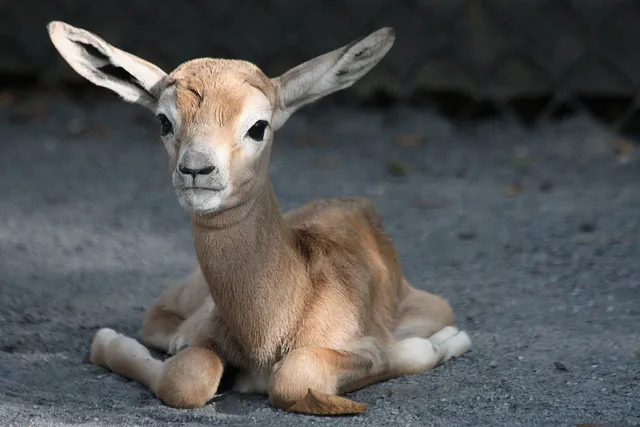
The Ancient Egyptian Pharaonic Root: Ghesa or Gehez (𓃲)
Way back in the Old and Middle Kingdoms (the era of the pyramid builders), the ancient Egyptians were deeply fascinated by gazelles. They hunted them, tamed them as royal pets, and associated them with Hathor, the goddess of joy, beauty, and grace.
In hieroglyphs, the native Egyptian word for a gazelle was written using the root G-H-Z or G-S-A (represented by the hieroglyphic sign of a gazelle's head 𓃲):
The Pronunciation: Egyptologists reconstruct the spoken vocalization of this pharaonic word as "Gehez", "Gahaz", or "Gesa".
The Shared Skeleton: Notice the triconsonantal consonantal skeleton here: G - H/Kh - Z. This matches the exact phonetic frame of the Arabic Gh - Z - L, where the pharyngeal and dental consonants naturally drifted over millennia between the cousin branches of the language tree.
2. The Coptic Survival: Gahz / Ghaza
As the hieroglyphs evolved into the Coptic language, the word maintained its phonetic footprint. In the various regional dialects of native Egypt, the word for a desert gazelle or a young, graceful deer was preserved as ⲓⲁϩⲥ (Iahs) or ⲭⲁⲥ (Khas), heavily retaining the throaty friction sound (Kh/Gh) paired with a sharp dental sibilant (Z/S).
3. Why This belongs in Masri Analysis
When early Arab tribes entered Egypt and spoke of the غزال (Ghazal) or غزالة (Ghazala), the native Egyptian population didn't feel like they were learning a completely foreign word from across the sea.
Their muscle memory and ancestral mouth habits instantly recognized the word because it perfectly aligned with their 4,000-year-old native root Gehez/Gahaz. The two cousin words experienced a perfect, effortless linguistic fusion in the streets of Cairo and Alexandria.
This proves once again that Masri is a continuous, unbroken chain of survival. When you use words to describe the beauty and grace of nature in Egypt today, you are tapping straight back into the vocabulary carved onto the walls of pharaonic tombs.