katnga’
BIKOL: TRANSLATION
natong; katnga
FILIPINO: TRANSLATION
gabi
PART OF SPEECH
noun
SEMANTIC DOMAIN
Plants; Agriculture; Root crops; Food and foodways
NOUN CLASS
plant
NOTES
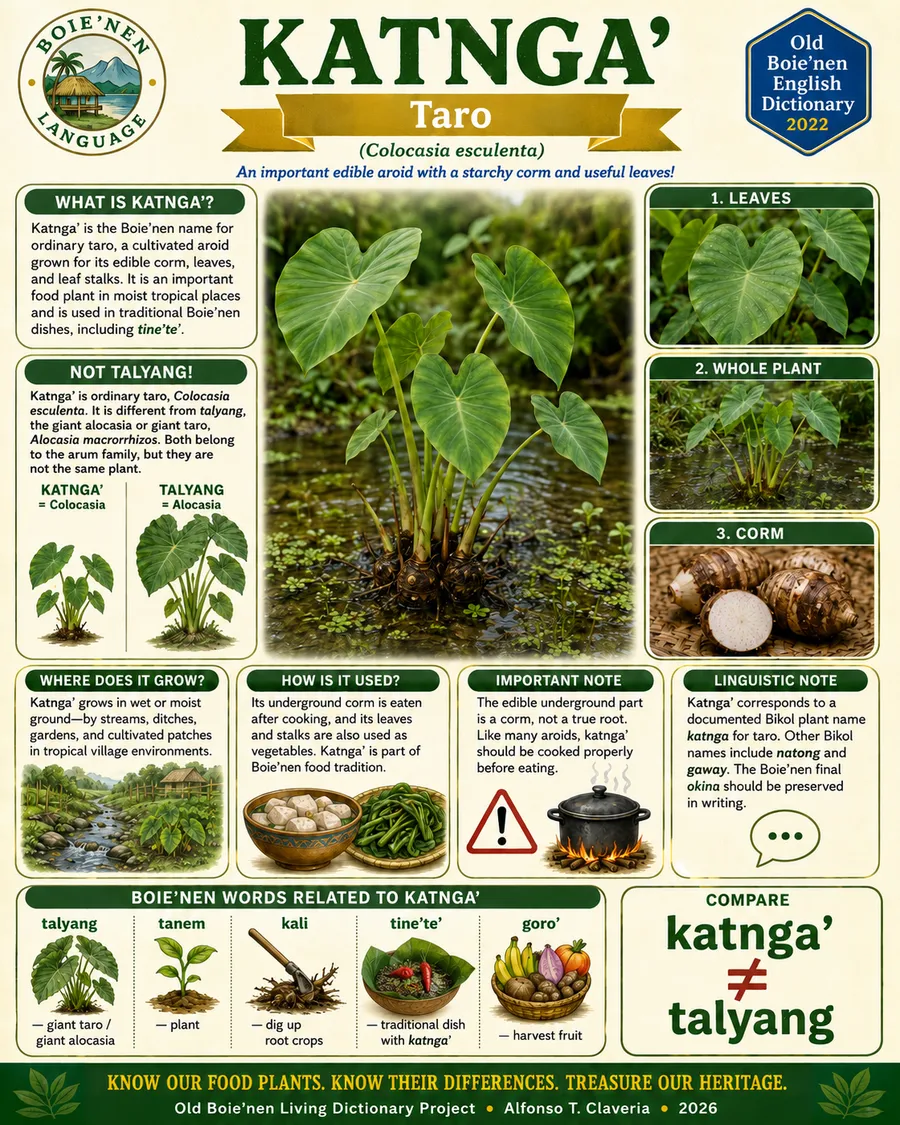
Katnga’ refers to ordinary taro and is distinct from talyang, the Boie’nen name for giant taro or giant alocasia, Alocasia macrorrhizos.
katnga’ — Colocasia esculenta — taro; gabi
talyang — Alocasia macrorrhizos — giant taro; giant alocasia
Although both are large-leaved members of the family Araceae, they belong to different genera.
The edible underground part of katnga’ is botanically a corm rather than a true root.
Katnga’ is traditionally associated with Boie’nen foodways, including the dish tine’te’.
RELATED ENTRIES
talyang; tine’te’; tanem; kali; ali-en; ngame’
CUSTOM TAGS
botanical; ethnobotanical; traditional-food; root-crop; cultural; poster-ready
EVIDENCE STATUS
Lexical identification: strong
Botanical identification: strong
Regional Bikol correspondence: strong
Deeper etymology: unresolved