iningwas
iningwas
n. /i.niŋ.was/
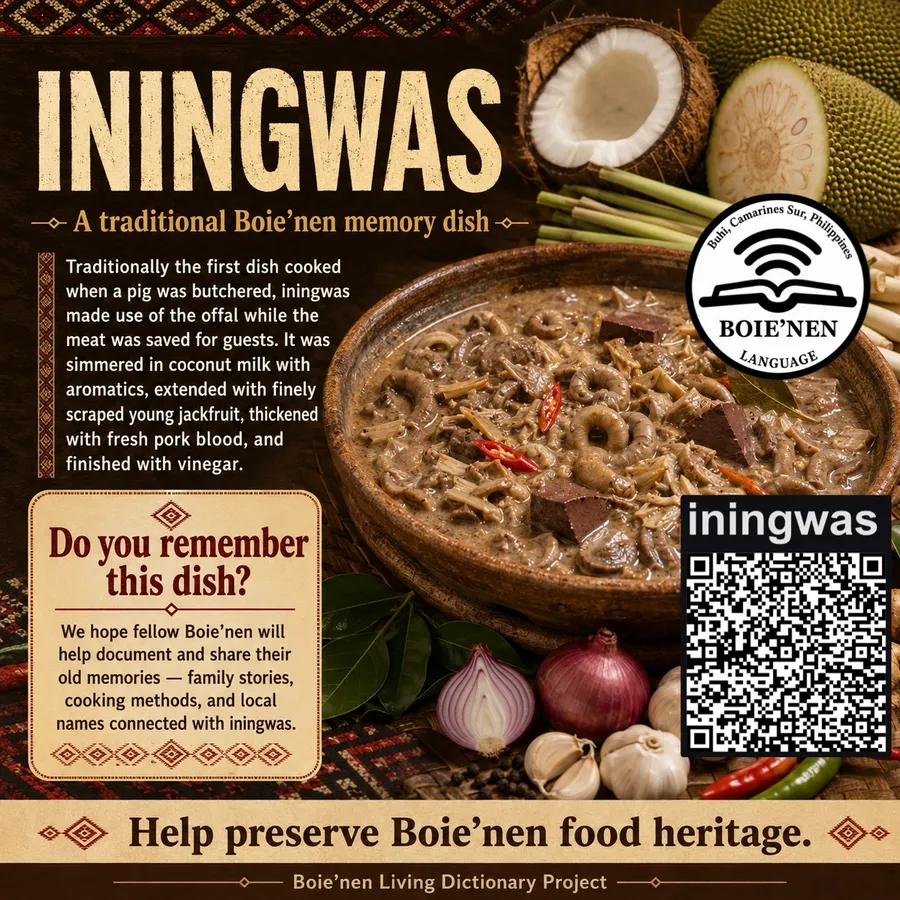
Iningwas was customarily the first dish prepared whenever a pig was butchered. The principal cuts of meat were reserved for guests or for later dishes, while the more perishable offal—especially the small intestines—was cooked immediately.
The cleaned offal is simmered in coconut milk with aromatics such as garlic, onion, ginger, lemongrass, and bay leaves, together with chilies for heat.
Very young, still-green jackfruit is traditionally used as an extender. A handle stick is driven into the fruit so that it can be held securely. After the outer skin is peeled away, the exposed flesh is repeatedly and finely graze-cut with a knife. The loosened surface is then scraped off, producing small minced pieces that are added to the stew.
After prolonged simmering and substantial reduction, fresh pork blood is stirred in to thicken and enrich the dish. A liberal amount of vinegar is added toward the end of cooking, giving iningwas its characteristic rich, sour, and mildly spicy flavor.
TRADITIONAL JACKFRUIT PREPARATION
- A sturdy stick is inserted into the young jackfruit as a handle.
- The outer skin is peeled away.
- The exposed flesh is repeatedly graze-cut into very fine surface fragments.
- The cut surface is scraped, releasing minced pieces.
- The minced jackfruit is added to the simmering offal as an extender.
DISTINGUISHING FEATURES
- prepared primarily from pork offal, especially the small intestines;
- traditionally the first dish cooked after a pig was butchered;
- simmered in coconut milk with local aromatics;
- extended with finely graze-cut and scraped young jackfruit;
- thickened with fresh pork blood;
- finished with a generous amount of vinegar.