kalambri
Semantic Domain
Body conditions; Muscular system; Health and illness
Notes
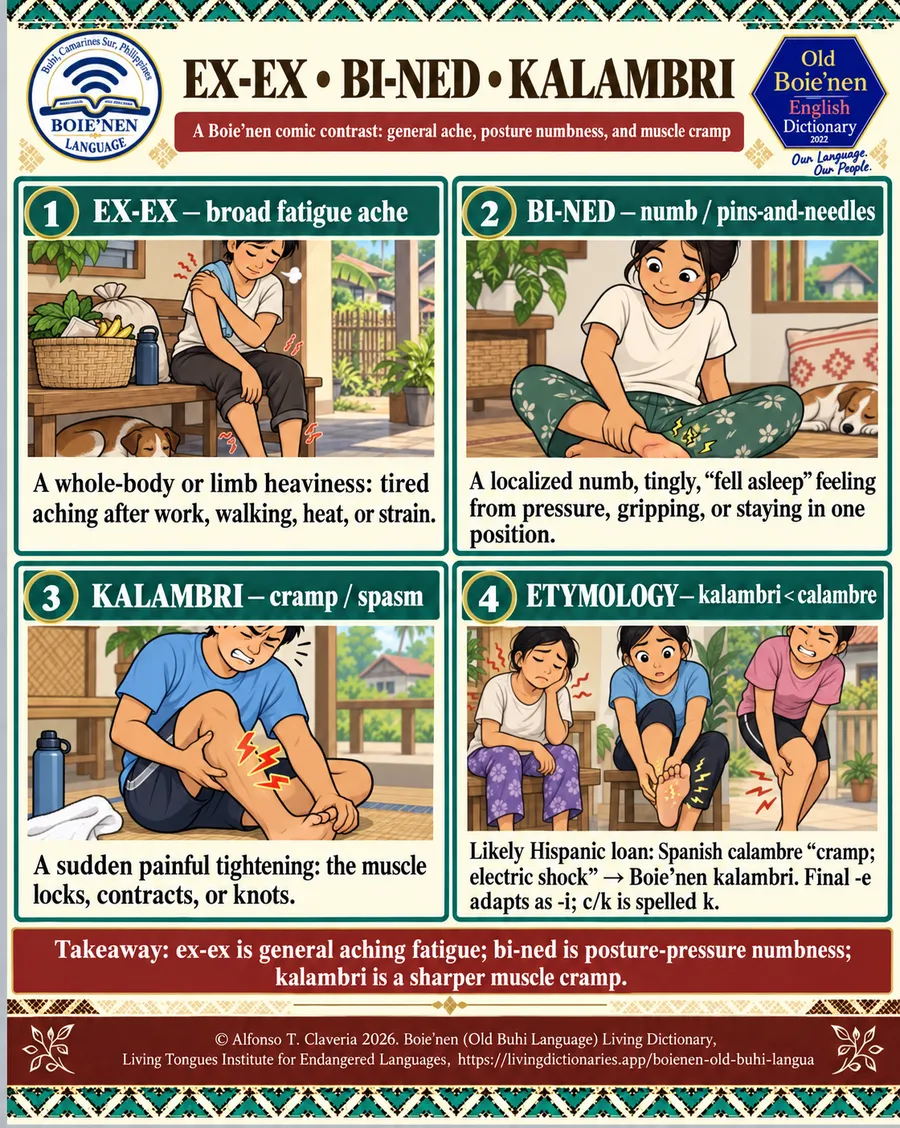
Kalambri denotes an actual muscular contraction, not merely numbness, tingling, fatigue, or an aching limb. The contraction may make movement difficult or temporarily impossible, but complete immobility is not required for the condition to qualify as kalambri.
English charley horse is an appropriate colloquial equivalent particularly for a cramp in the calf or another leg muscle. Crick may describe painful neck stiffness, but it is not a general equivalent of kalambri.
Do not use tetany as a direct translation. Tetany is a particular medical condition involving involuntary muscular contractions and has a narrower clinical meaning. Myospasm is also an unnecessarily technical and broader label; muscle cramp is the clearest English equivalent.
Semantic distinction
- kalambri — painful, involuntary muscular contraction; the muscle tightens or seizes
- bi-ned — numbness, tingling, heaviness, or fatigued aching without muscular seizure
- ex-ex — more general muscular fatigue, soreness, numbness, or bodily malaise