lagadi’
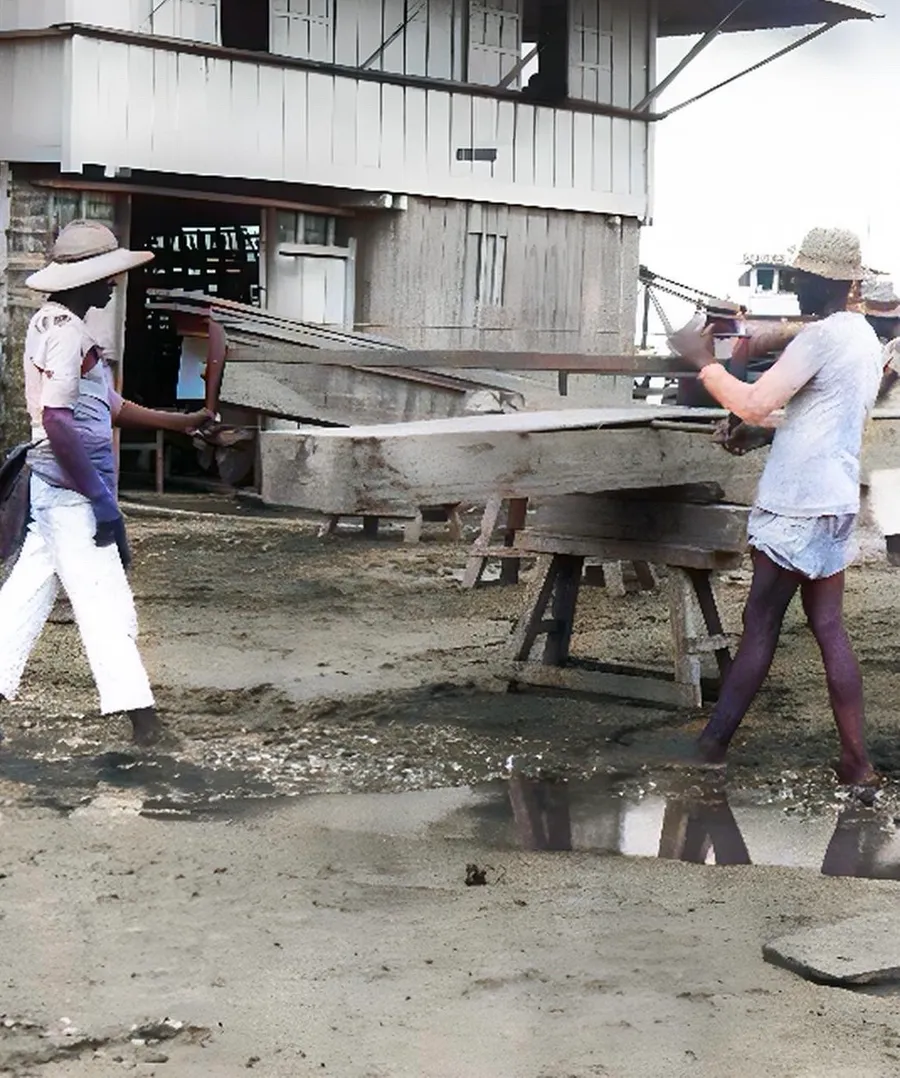
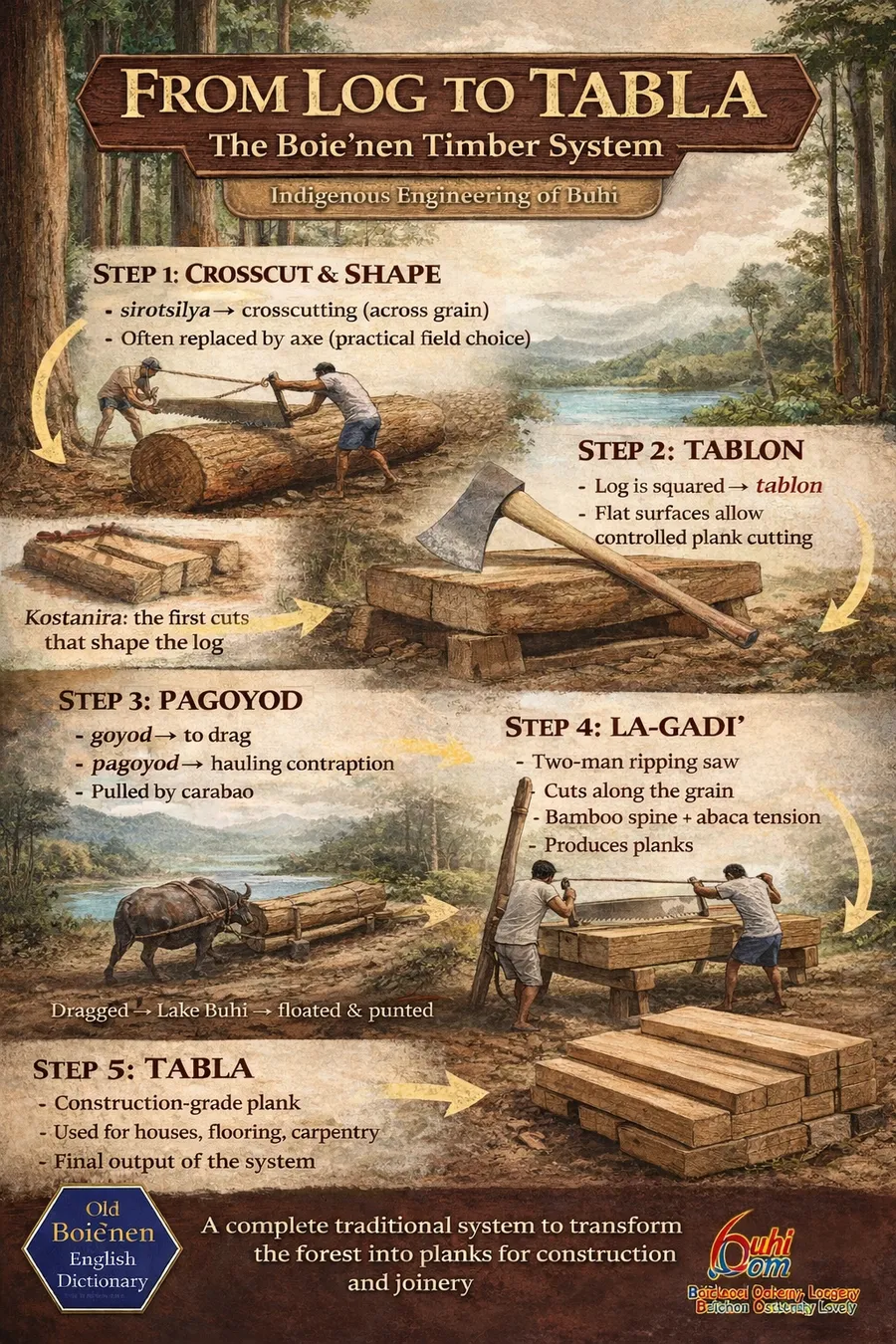
The “lagadi’” (a Boie’nen term, likely related to the Tagalog “lagari” meaning saw) is a traditional two-man ripping saw used by Boie’nen lumberjacks in the Buhi area of Camarines Sur, Philippines. Known locally as a “paratablon” (suggesting “squared logs” or tablón in Spanish-influenced terminology), it is specifically designed for ripping (cutting parallel to the grain) large logs to first square these then cut them further into planks or slabs. This ancient tool reflects indigenous adaptation to the then rugged, forested environment of Buhi, utilizing abundant local materials for portability and functionality in remote sitios (hamlets).
Key features remain consistent:
• Blade: A long, straight steel blade (typically over 7 feet in length) oriented perpendicular to the yokes/handles, equipped with rip teeth (chisel-like for chopping along the grain) to efficiently convert logs into usable lumber.
• Main Horizontal Brace: A robust bamboo pole (often noting) forming the top frame or spine, chosen for its strength, lightness, and availability.
• Handles or Yokes: Wooden attachments at the bamboo orifice at each end of the brace with a carved protruding knob in the middle part that snugly fit into the brace orifice securing the blade and serving as grips for the operators.
• Tightening Ropes: Crafted from durable abaca (Manila hemp) fibers, these ropes maintain blade tension and run parallel to the blade at a balanced distance from the brace.It is tensioned by twisting the two ropes that loops at the notch at the tip of each yoke at the center with a sturdy stick one end of which rests on the brace to lock the tension on the tensioning rope.
• Clearance Adjustment: The space between the blade and bamboo brace is set according to the length of the yokes, with ropes adjusted for optimal tension and stability.
Operation: The lagadi’ is exclusively used for ripping planks from large, freshly felled logs that are too heavy to move whole. First, the log is roughly squared on-site using axes (hewing the rounded exterior to create flat sides). This “squared log” can then be hauled by a single carabao (water buffalo) to a workable location. There, it is elevated onto two sturdy sawing horses (trestles). Two paralagadi’ (professional sawyers) stand on either side of the raised log, gripping the yokes and pulling the saw in alternating strokes to rip precise planks along the grain. This horizontal setup (unlike vertical pit sawing) allows both operators to work at ground level, making it suitable for the terrain and labor conditions in Boie’nen communities.