abex
Phonetic
[ɘb‿ɘ’ːːʁʁ.]
English: Translation
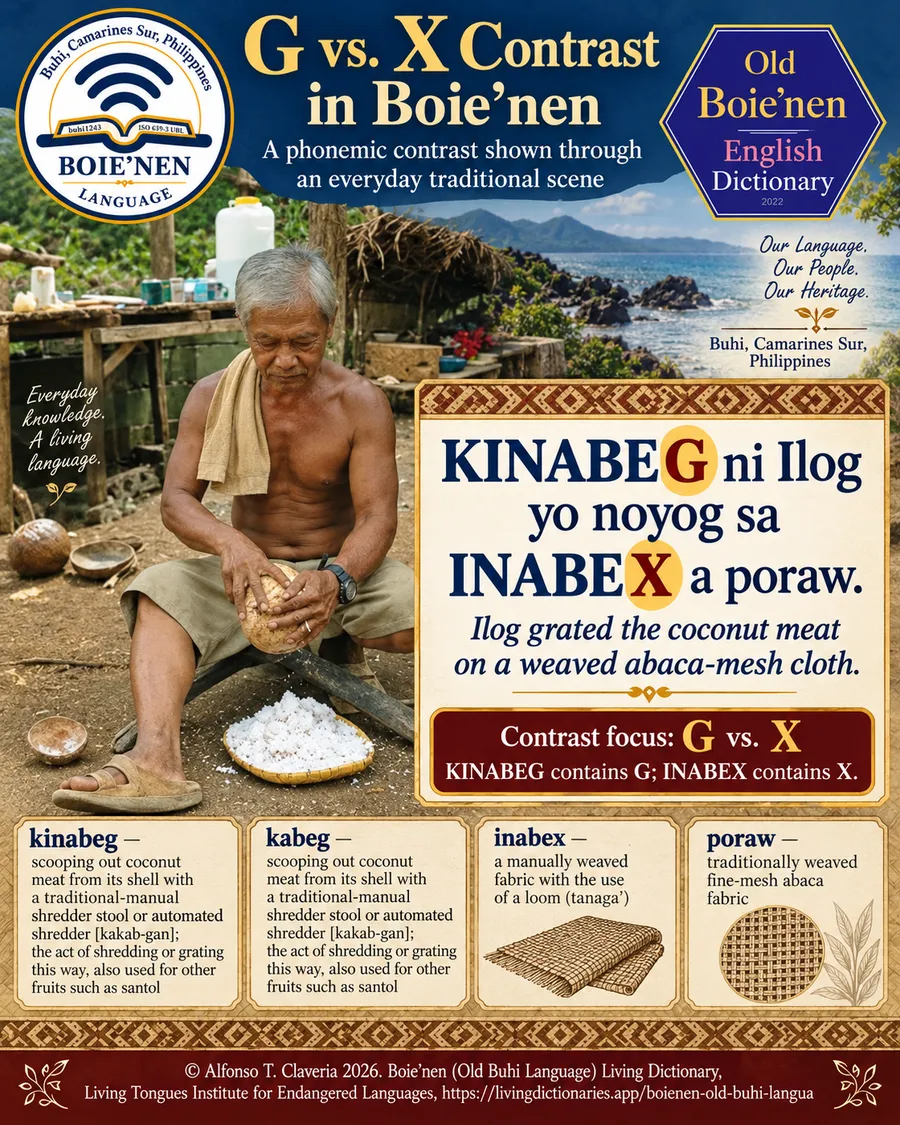
the traditional process of weaving cloth by hand using a tanaga’ loom; the craft, trade, or occupation of weaving; to weave cloth manually on a loom.
Part of Speech
entry word / discourse particle
Semantic Domain
Daily life
Physical Actions
Art, crafts and textiles
Work and occupations
Custom tags
Phoneme X
Morphology
abex, inabex, miabxen, nangagioroinabxan, mari’gena-abex, magiaxabxan,
Notes
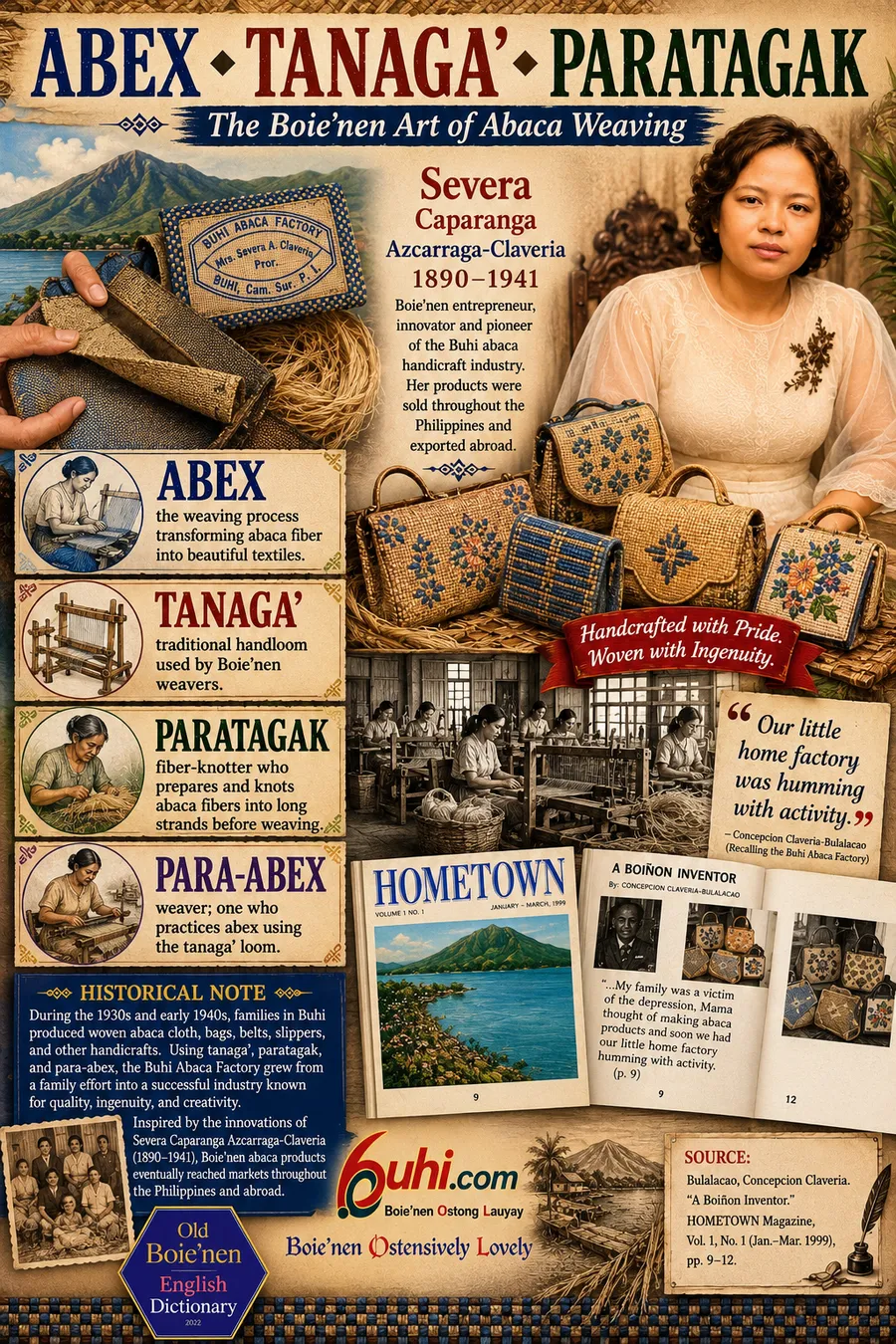
Traditionally associated with the production of abaca textiles and handicrafts.
Historical accounts describe household weaving workshops employing handlooms (tanaga') and producing bags, belts, slippers, wallets, and other woven goods from abaca
Linguistic History
HISTORICAL NOTE During the 1930s and early 1940s, Buhi became known for a thriving household-based abaca handicraft industry. Families produced woven cloth, handbags, belts, wallets, slippers, and other articles from locally grown abaca fiber. Traditional handlooms known as tanaga’ were used in the weaving process (abex), while specialized workers called paratagak prepared long knotted strands of fiber for weaving. One of the most notable enterprises was the Buhi Abaca Factory established by Severa Azcarraga Claveria (1890–1941). What began as a family effort to supplement household income during the economic depression grew into a successful cottage industry whose products were sold throughout the Philippines and exported abroad. The industry stands as an important example of Boie’nen craftsmanship, ingenuity, and entrepreneurship.