malobago
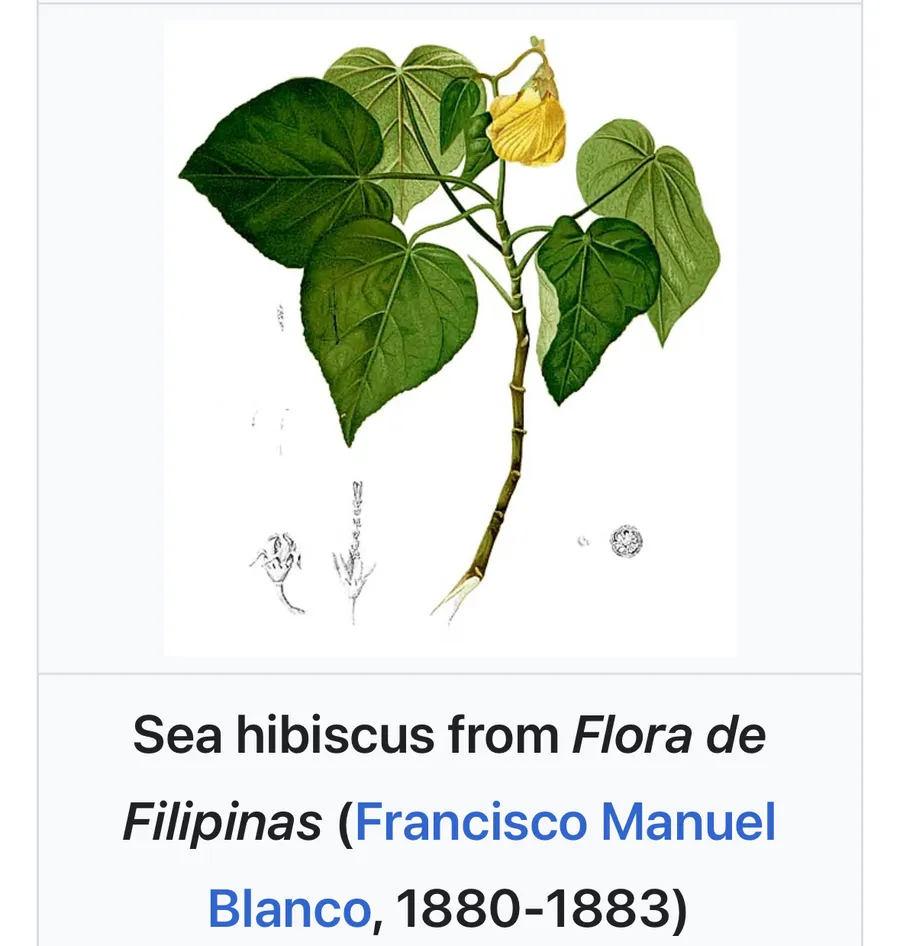
see:
sea hibiscus or coast cottonwood
A tropical tree from the mallow family, characterized by:
○ Heart-shaped leaves
○ Large, showy yellow flowers that mature to orange-red
• Habitat: Commonly found along coastal areas, including the shorelines of the Rinaga' river
• Traditional use: Leaves used for wrapping sinarapan, a local delicacy or food item.
Key Characteristics
Appearance:
A small to medium-sized tree, 4 to 12 meters (13 to 39 feet) tall, with a much-branched structure.
Leaves:
Suborbicular (nearly circular) or ovate, 10-15 cm (4-6 inches) long, with a cordate (heart-shaped) base and a finely toothed margin. The upper surface is smooth and shiny.
Flowers:
Large, 5 cm (2 inches) long, with yellow petals that have a purple center. As they age, the flowers change to an orange-red color.
Growth:
Grows well in various tropical and coastal conditions. It thrives in full sun and can be found along beaches and riverbanks.
Other Names
The malabago tree is known by several common names, including: Sea hibiscus, Coast cottonwood, Sea rosemallow, and Talipariti tiliaceum.
Ecological Importance
- It is a valuable plant for coastal erosion control due to its ability to grow in sandy and waterlogged soils.
- The fibers from its stems have been traditionally used for ropes and other materials.