da-eg
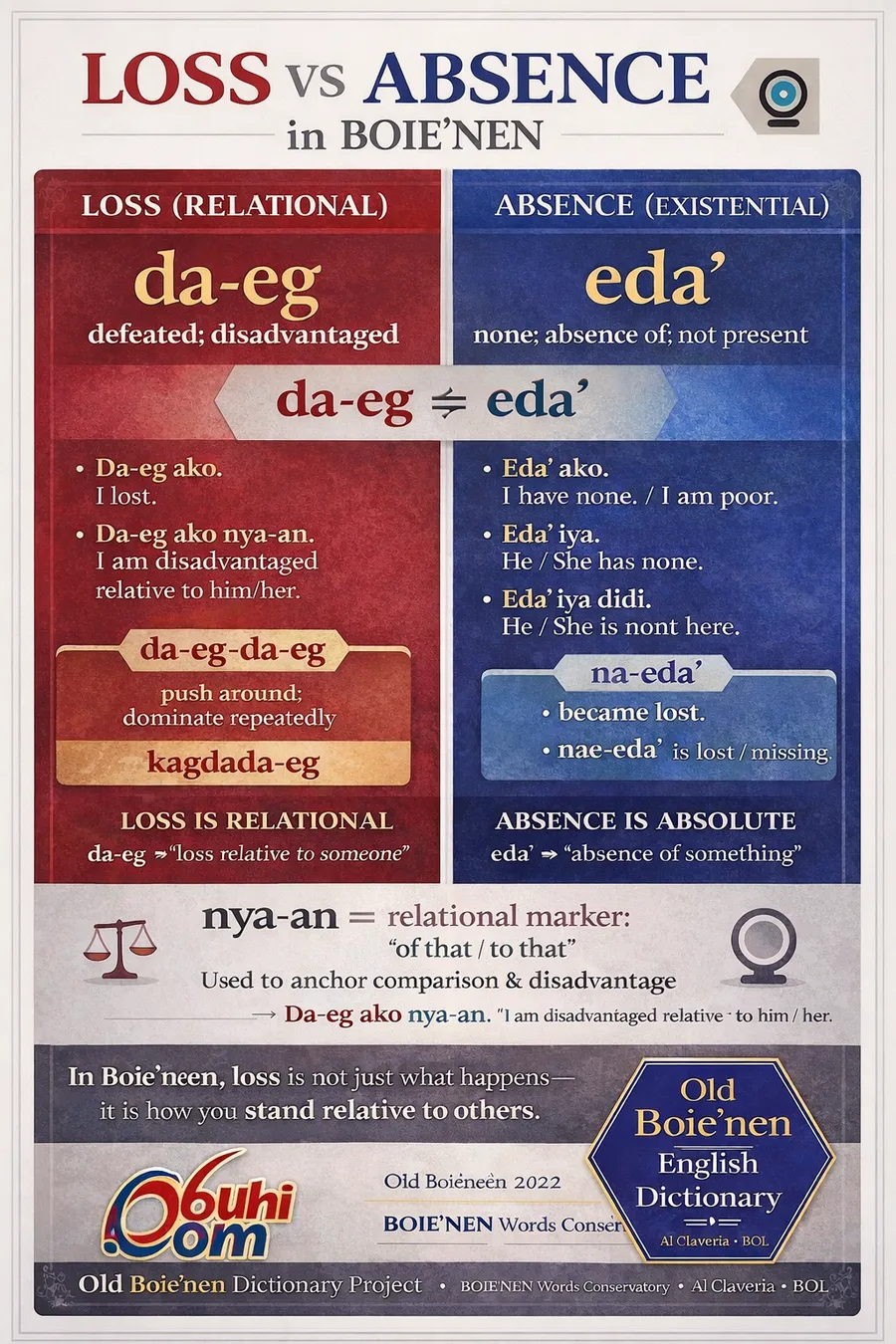
English: Translation
to be defeated; to have lost (in a contest, argument, or wager) to be at a disadvantage relative to another
Filipino: Translation
talo
Part of Speech
stative verb
verb
Notes
see:
- da-eg → see also: eda’, kagdada-eg
- eda’ → contrast with: da-eg (loss vs absence)
———
da-eg v., stative / resultative
Definition:
- to be defeated; to have lost (in a contest, argument, or wager)
- to be at a disadvantage relative to another
Semantic note:
Encodes a resulting state rather than the act of losing itself—i.e., the condition after loss. This aligns with Boie’nen’s aspect-prominent system.
Examples:
- Da-eg ako.
“I lost.” - Da-eg ako nya-an.
“I am at a disadvantage compared to him/her.”
→ extends from literal loss → relational inferiority / underdog status
Lexical insight:
This root naturally extends into social hierarchy and power imbalance, not just competition.