badi’
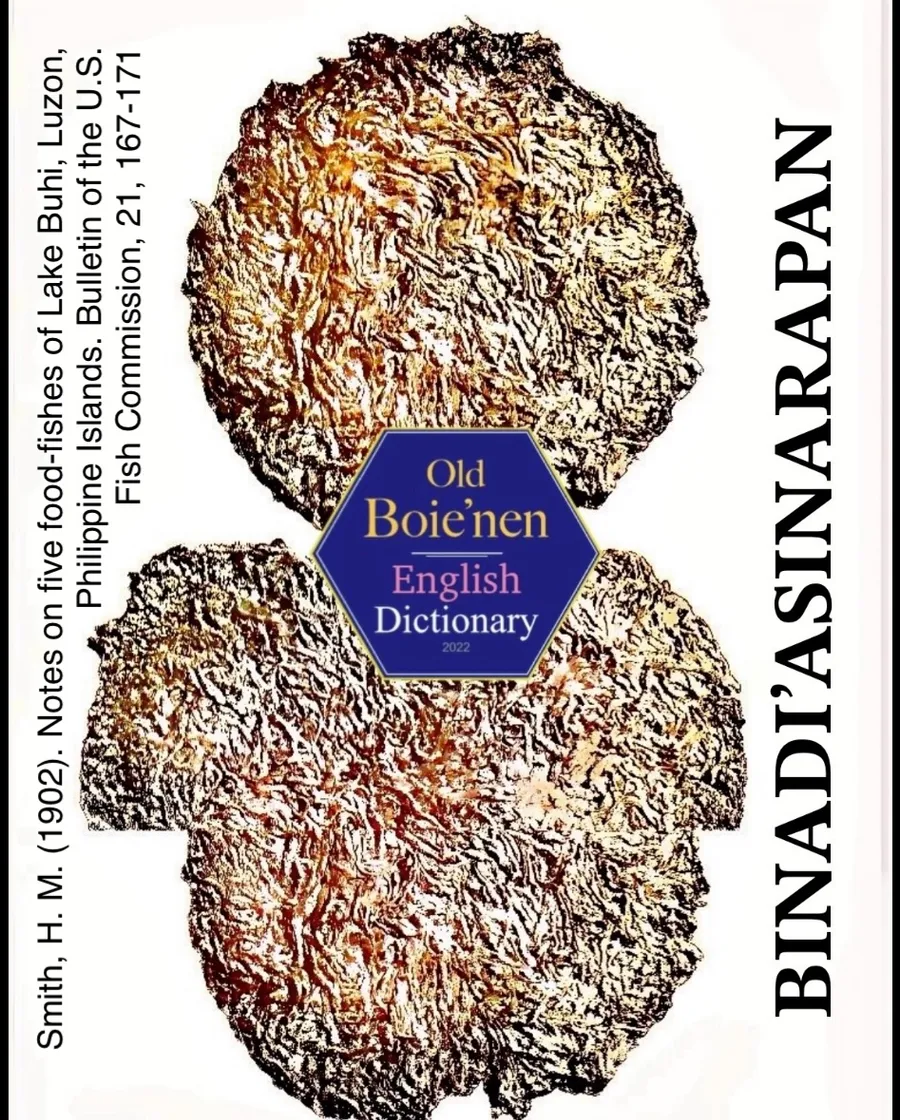
Badi’: “dried in the sun on a leaf are called ' badi.' “
Smith, H. M. (1902). Notes on five food-fishes of Lake Buhi, Luzon, Philippine Islands. Bulletin of the U.S. Fish Commission, 21, 167-171.
(page 169)… “Many varieties of fish abound in the lake, but by far the most numerous are these minute specimens. They are called in the native Bicol tongue "sinarapan,' and when dried in the sun on a leaf are called ' badi.' (They are caught by a large sheet of close web, which is dipped under wherever a school congregates. They are put into tightly woven baskets from which the water soon drains, leaving a compact mass of fish. They are not minnows or immature fish. They are adults and attain no greater size. The natives buy them eagerly; and when the little fleet of fishermen return from their morning's quest and place their baskets upon the ground on the market place, they are instantly surrounded by a crowd. of waiting children who, armed with every sort of dish, are anxious to take home the family meal. They bring three or four potato tubers, a handful or two of rice, or a few copper pennies, and in exchange receive about a pint of fish. In the kitchen the fish are made up with peppers or other spiced herbs, and they do not taste bad.
The soldiers have become quite fond of this food, and liberally patronize the little native restaurants where it is served.”.
(Smith, 1902, p. 169)