ta’gok
English: Translation
To produce a loud, vocal sound, such as: - Roosters crowing - Certain types of animal calls (e.g., croaking) - Yodeling or similar vocalizations; this term encompasses various forms of loud, often piercing or resonant vocal expressions.
Notes
ta’gok
n., v. (onomatopoeic)
n.
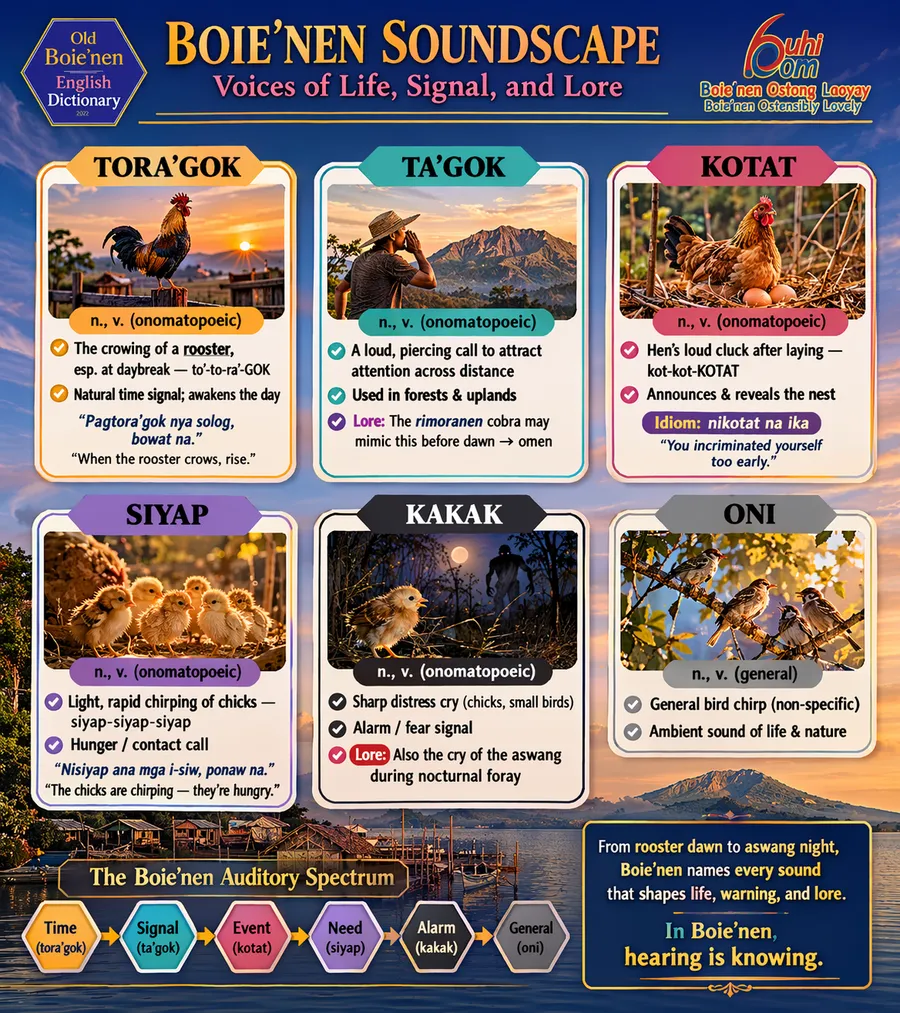
A loud, piercing yelp or call used by humans—especially in upland or forested areas—as a long-distance sound beacon to attract attention or signal presence.
v.
To emit such a call; to yelp or project one’s voice sharply across distance.
Ethnographic note:
In Boie’nen lore, the rimoranen (Philippine cobra) is believed to produce a pre-dawn call resembling tora’gok. This sound is treated as an omen (often of death or misfortune). Children are cautioned against imitating it.
Semantic contrast:
Unlike tora’gok (rooster, cyclical/natural time signal), ta’gok is intentional, human-directed signaling (though mythologically extended to non-human agents).
- tora'gok → cyclical / time-marking (rooster, dawn)
- ta'gok → projected /intentional (human signal, mythic extension)
- kotat → event-announcing (egg-laying→ self-revelation metaphor)
- siyap → need-based (hunger/contact)
- kakak → distress/alarm
- oni → general/default category