bandar loɽi
Devanagari Script
बनदर लोड़ि
Phonetic
[bandar loɽi]
English: Translation
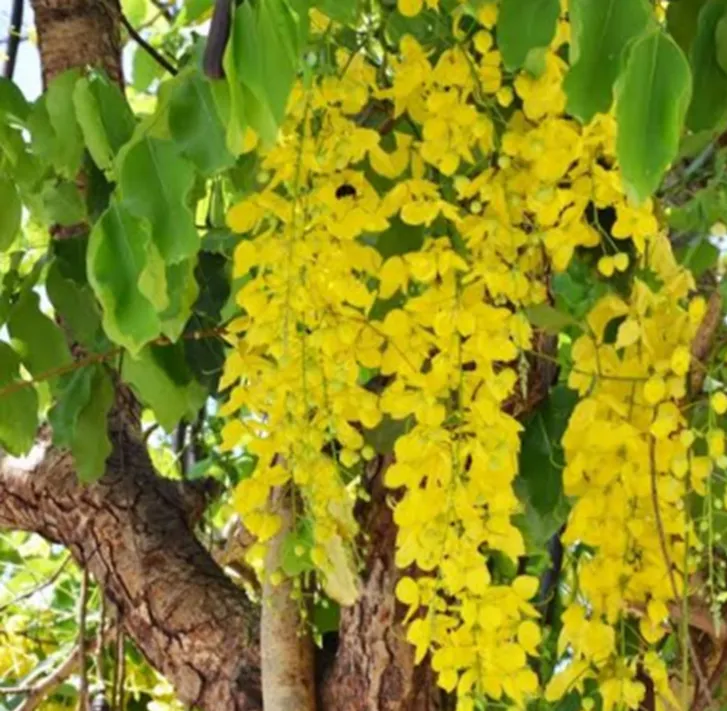
Cassia fistula L. Note: 'bandar loɽi' means 'monkey’s tail' in Hindi
Hindi: Translation
अमलतस
Semantic Domain
Plants, trees and other vegetation
Health, well-being and sickness
Notes
This plant is also known as harri in Mundari, bonurlati in Oraon, and dauranch in Kharia. It has medicinal values for: Skin diseases, boils, wounds, kidney stones, dry cough, fever, dysentery
- Root: A paste prepared from the roots (rehet) is useful in treating skin diseases.
- Bark: A paste of the bark (baklaʔ) is applied externally around boils or wounds. A bark (baklaʔ) extract is given to people suffering from gall and kidney stones.
- Leaf: Leaves (sakam) are used for skin diseases, burning sensation, dry cough (kʰuʔ) and fever (rua).
- Pastes prepared from leaves (sakam) are applied on the body twice in a day for 2-3 days in case of high fever (rua).
- Fruit: The fruits (dʒo) are particularly used for the treatment of dysentery.
- A decoction of leaves (sakam) and fruits (dʒo) is used as a laxative.
Culinary use - Flower: flowers (baha) are boiled (hõɽeʧ) and dried (rohoɽ) to preserve for another season. In summer (sitoŋ) they cook the flowers (baha) by mixing them in dael, a soup prepared from dried, split pulses (e.g., lentils, peas, and beans).
Santali: bandarlauri
ID
21