nim
Devanagari Script
निम
Phonetic
[nim]
English: Translation
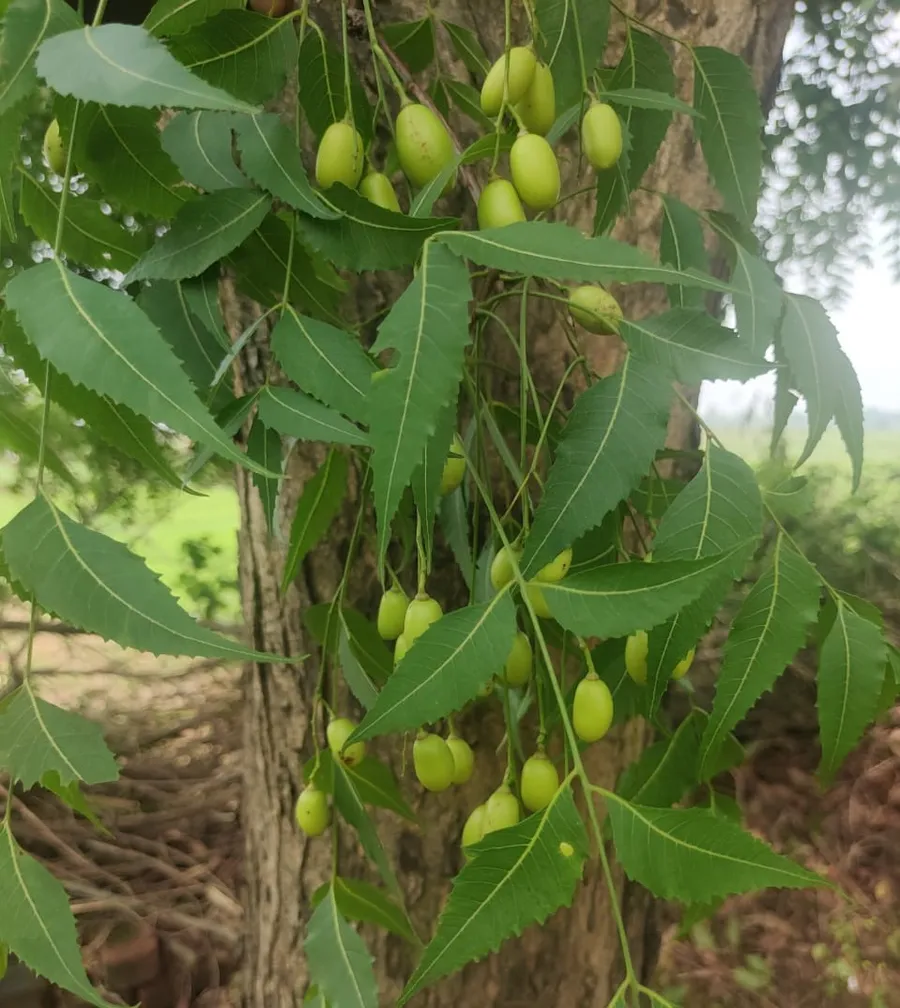
neem, Azadirachta indica A. Juss
Hindi: Translation
नीम, neem
Semantic Domain
Plants, trees and other vegetation
Health, well-being and sickness
Notes
All the parts of the nim tree are considered useful to the Birhor community. Because of its antibacterial and antifungal properties, it is used as a medicinal plant. The stem, root, bark and fruit are used as a tonic and astringent.
Medicinal values for: Skin diseases, itching, wounds, tooth cavity, foul breath, diabetes
- Stem: The stem (ɖãʈiʧ) or young twigs are used as ɖatun (a teeth-cleaning twig) used by the community people for fresh (ʈaʈka) breath and cavity free teeth.
- Bark: A paste prepared from the bark (baklaʔ) is used for the treatment of skin disease.
- Leaf: The leaves (sakam) are burnt in houses to purify the air and keep insects away. The leaves (sakam) are also spread among stored (dʒamaj) grains to protect them from insects. It is considered good for controlling blood sugar.
- Seed: They peel the skin of the fruit (dʒo) and dry the seed (dʒaŋ) and make an oil from it. It is useful against itching and for treating wounds.
Culinary uses - Leaf: The young nim leaves (sakam) are mixed with other vegetables like brinjal (bʰaʈa) or tomato (bilati) and cooked.
Other use - Wood: The wood (sahan) is used as firewood (dʒul-raʔ sahan). Wood (sahan) is also used in making sagaɽ kun (carts for carrying loads).
ID
12