matkom
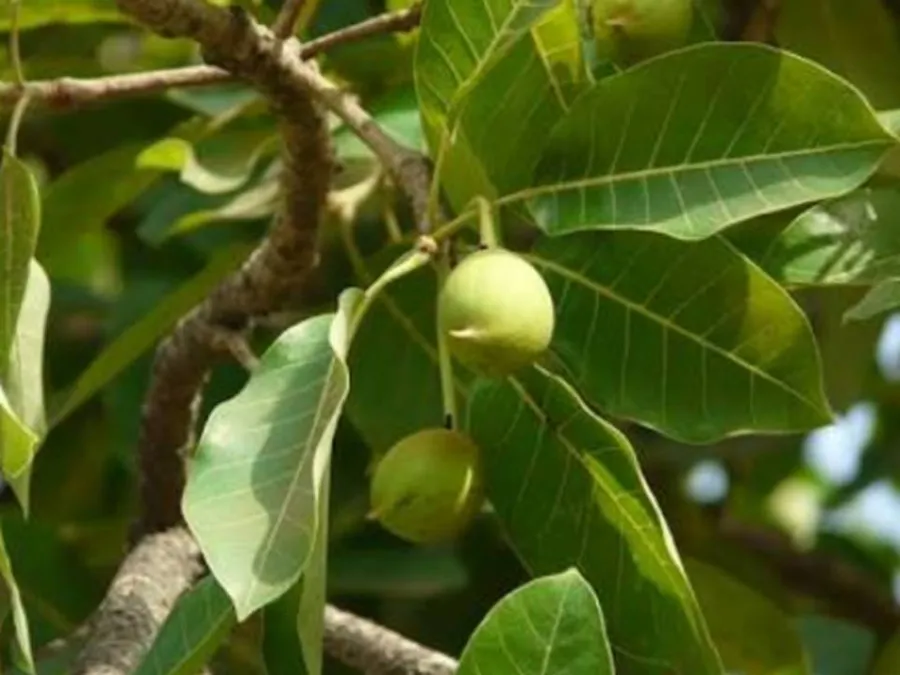
matkom seeds are of economic importance as they are a good source of edible fats. Flowers, fruits and leaves are edible and are used as vegetables in India.
Medicinal values for: acute tonsillitis and bronchitis
Flower: The community oʤʰa (village doctor with knowledge about herbs and shrubs) considers the distilled juice (ros or rasa) of the flower (baha) as a tonic to cure acute tonsillitis and bronchitis.
Seed (koẽɖi): Oil (sunum) extracted from the seed (dʒaŋ) is used for both edible and medical purposes. It is considered as an important oil (sunum) and used in food preparation and to cure shoulder pain in cattle.
Other uses - Branch: Some branches (ɖaer) are used in decoration of the marriage platform (ʤʰamɽa). Flowers (baha) have been traditionally used as a cooling agent and the juice (ros or rasa) extracted from the flowers (baha) is consumed during the summers (sitoŋ) for resistance to heat. Also, it is used as a traditional drink for refreshment.
Preparation method of arkʰi (a traditional liquor): Dry matkom flower (baha) is put in a pot (ʧaʈu) and mixed with jaggery (guɽ) and water (daʔ) and left for 5-6 days. The mix is then boiled (hõɽeʧ) and by the precipitation method a traditional liquor (arkʰi) is prepared. A sweet cake (laʈʰo) is made from dry matkom flower (baha) by mixing it with the powdered form of different types of pulses like pigeon pea (raheɽ-ko), gram (ʧana-kun) and peas (maʈar-kun). The mixture is then boiled in water and after letting it cool down a little, while it is still warm, small amounts of the thick paste mixture is picked by hand and squeezed to make laddu (a sphere-shaped sweet originating from the Indian subcontinent).
Santali: matkam