maʈʰa aɽaʔ
Devanagari Script
मठा अड़ाः
Phonetic
[maʈʰa aɽaʔ]
English: Translation
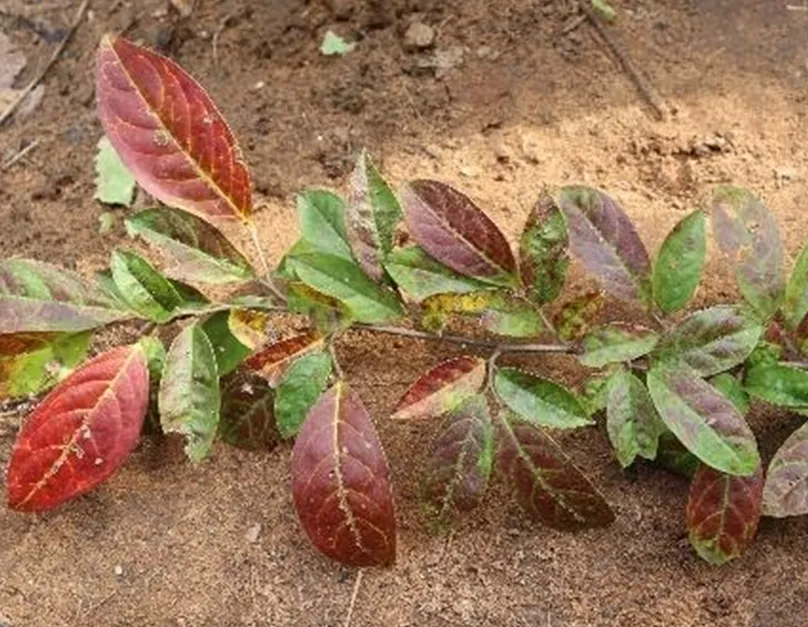
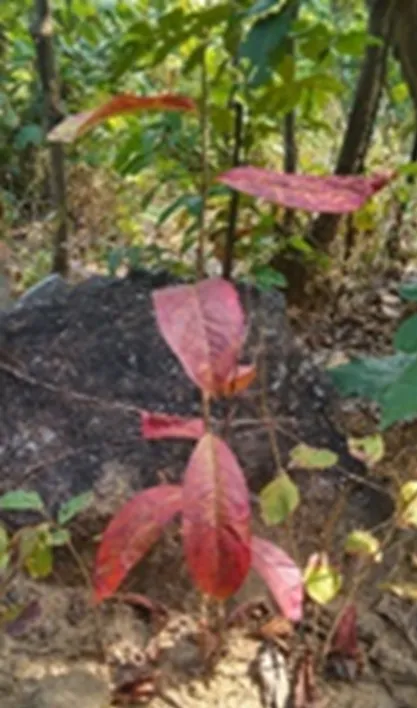
Antidesma diandrum (Roxb.) Spreng.
Hindi: Translation
खतुआ
Semantic Domain
Plants, trees and other vegetation
Health, well-being and sickness
Notes
maʈʰa aɽaʔ is used as a culinary item with medicinal benefits too.
- Leaf: The leaves (sakam) are sweet-and-sour (sibil-dʒodʒo) in taste.
- Preservation technique: The leaves (sakam) of the plant (daru) are first dried (rohoɽ) in the sun (siŋgi boŋga). After the leaves (sakam) are completely dried (rohoɽ) up it is crushed (kʰeʧaʔ) until it turns into powder (lubuʔ). The leaves (sakam) are turned into powder (lubuʔ) form so that they can be easily preserved and used for a longer time.
- Culinary use: The powder is used to prepare a traditional healthy soup (maɽ ʤʰor) by mixing it with rice starch (daʔ maɽi).
- It is preferably mixed with dael (soup prepared from dried, split pulses (e.g., lentils, peas, and beans) to add flavour, and served with rice.
- It is also added to meat (dʒilu) curry of the torhot (monitor lizard,* either Varanus monitor or Varanus flavescens).
- Fresh leaves (baleʧ sakam) are cooked in mustard oil (sorso sunum), adding chili (marʧej), garlic (rasun) and onion (pejadʒ) or to make curry by adding rice starch (daʔ maɽi) which becomes an alternative to dael.
- Medicinal values for: dehydration, stomachache, ulcers, wounds
- Root: A soup prepared by the roots (rehet) of the plant is also used as a medicinal tonic to cure dehydration and stomachache.
- Bark: The bark (baklaʔ) paste is used to cure ulcers and wounds.
Santali: maʈʰa aɽaʔ
ID
6