ʤom bajer
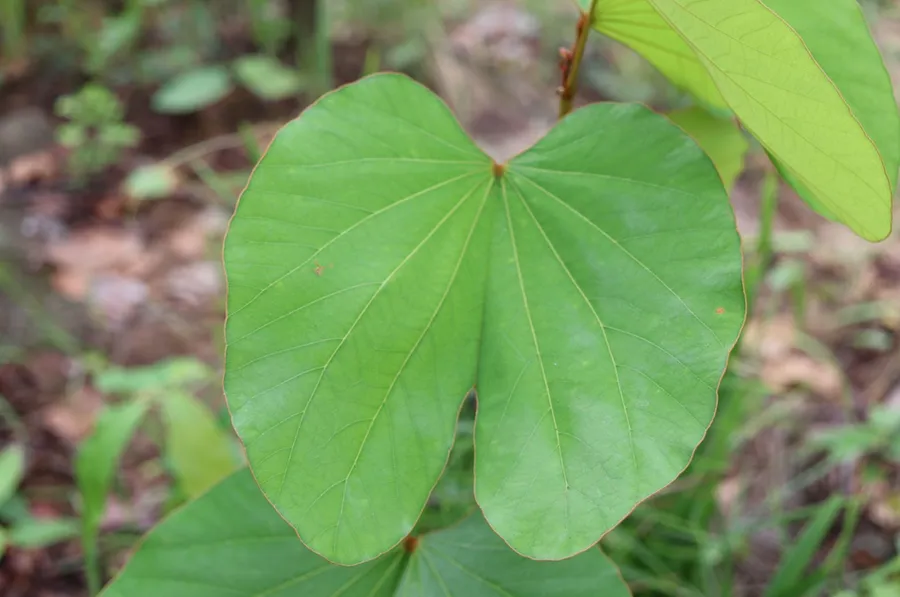
This plant is the largest creeper in India and can grow up to 10-30m long. Flowering and fruiting are observed only in mature climbers of 20m to 30m height.
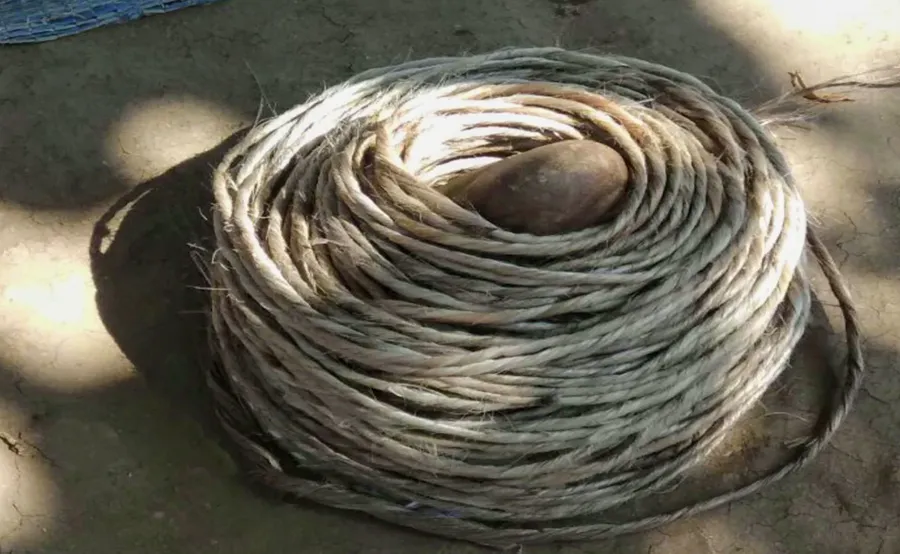
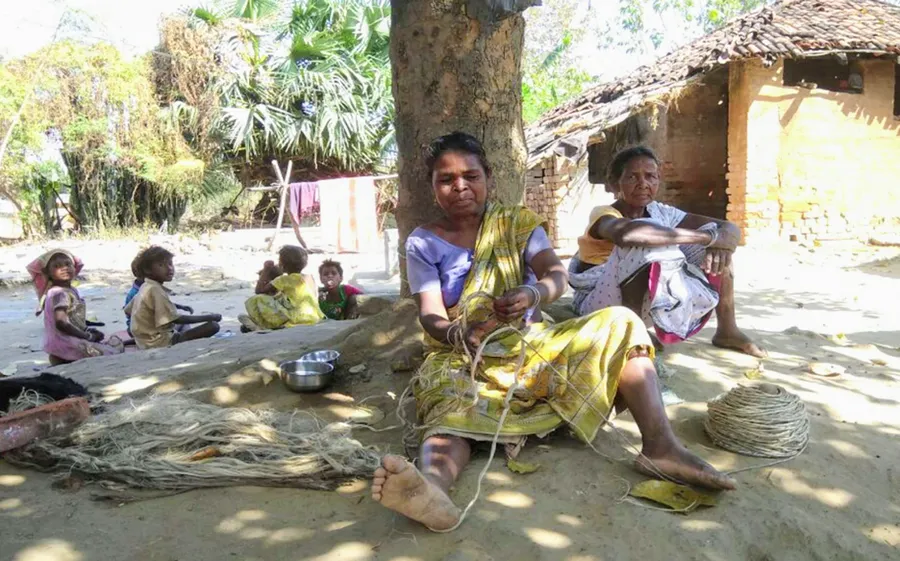
It is one of the most important economic plants of the Birhor, as it is a primary source of the rope that they make for their subsistence. The rope making process is basically divided into different phases:
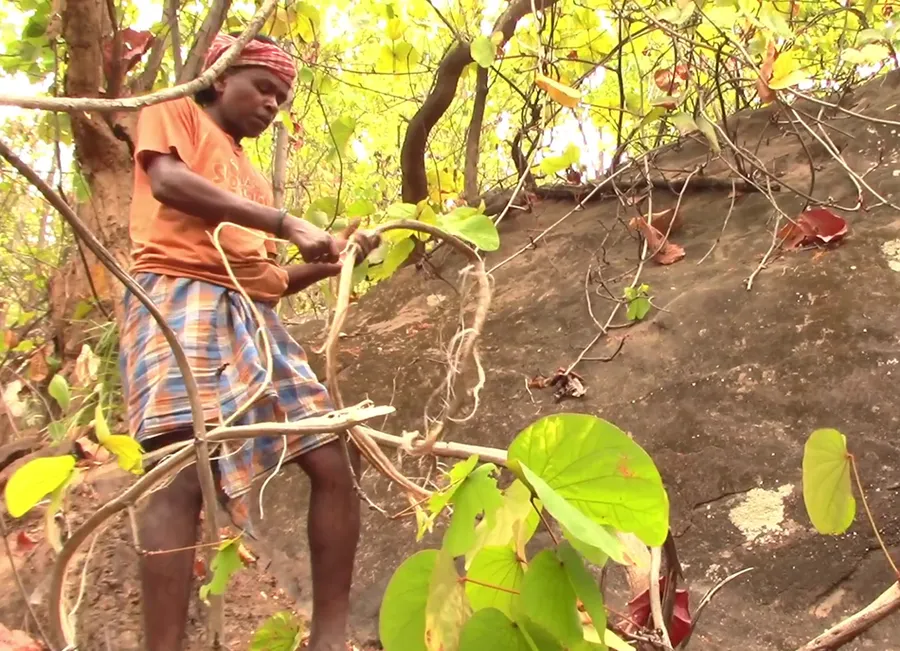
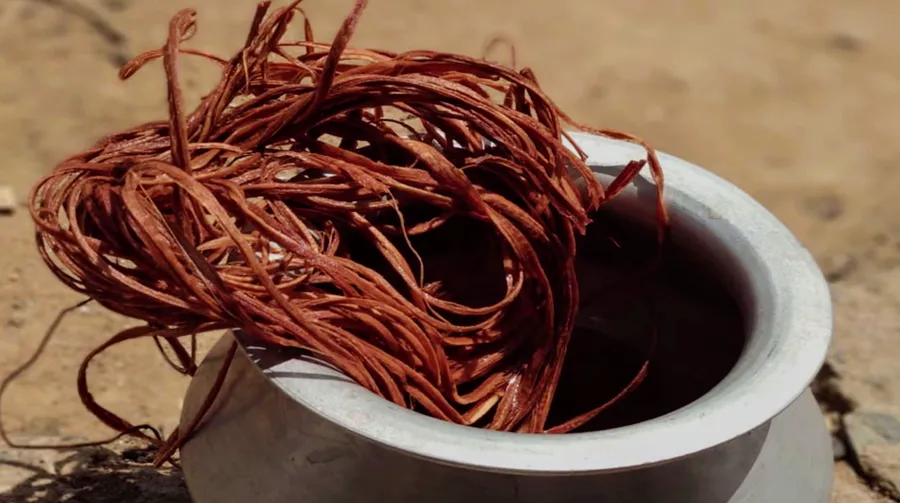
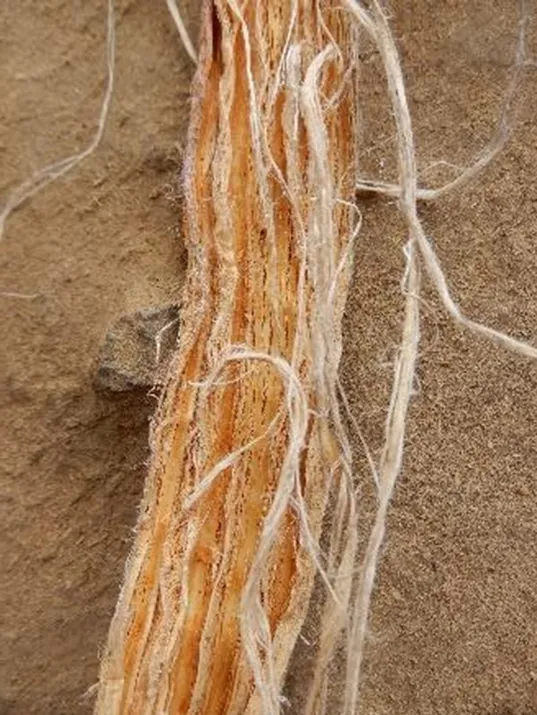
Collection of fibres - The men are primarily engaged in the collection of the raw materials required for making rope (ɖora). They harvest the inner bark (baklaʔ) of the live vines of dʒom bajer.
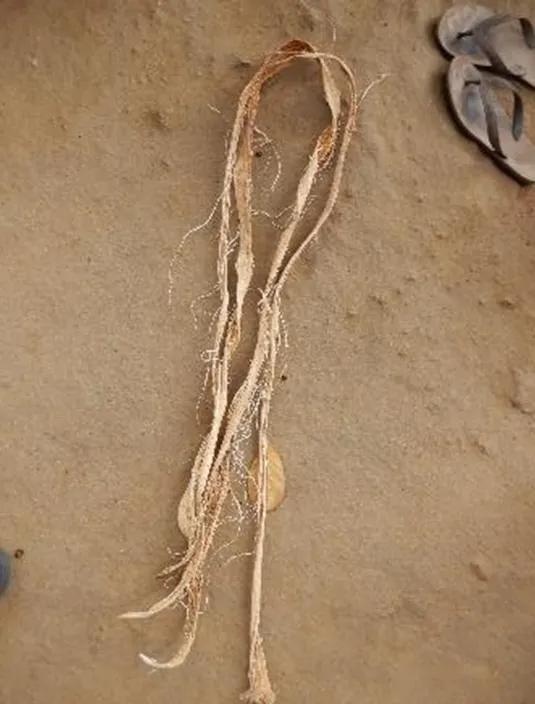
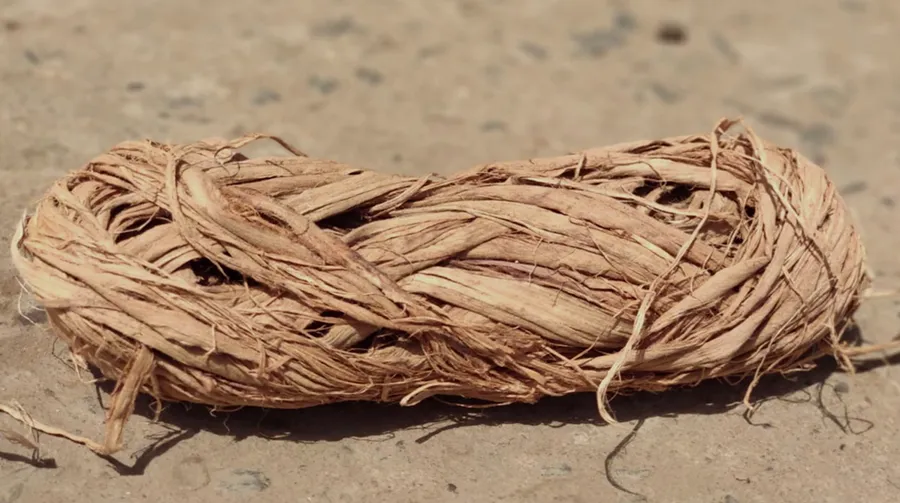
Rot the fibres - The fibres are then left for a few days to rot (sejaʔ) to the right consistency. The fibres are then separated with care and precision from the bark (baklaʔ) strips.
Making Rope - The separated thread-like fibres are then taken care of by the women of the community, who twist and braid the fibres together into a larger and stronger form, ready for sale.