bir saɽu aɽaʔ
Devanagari Script
बिर साड़ु अड़ाः
Phonetic
[bir saɽu aɽaʔ]
Hindi: Translation
अरबी
Semantic Domain
Plants, trees and other vegetation
Health, well-being and sickness
Scientific Name
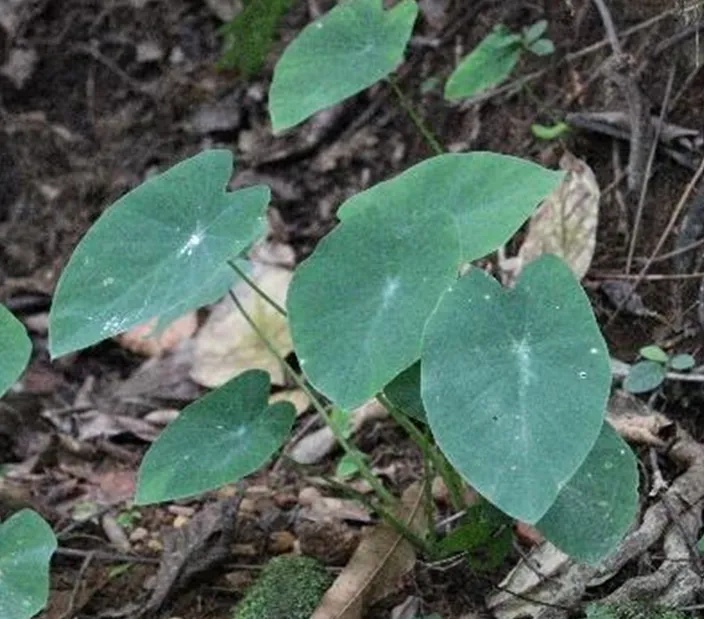
Colocasia esculenta (L.) Schott
Notes
The leaf of bir saru aɽaʔ is a nutritious leafy green that resembles spinach. While the leaves can be poisonous when eaten raw (berel), cooked leaves can be a versatile and nutritious addition to one’s diet.
Medicinal values for: Digestive problems, blood pressure, cuts, wounds, stomachache
- Leaf: The leaves (sakam) are an excellent food for boosting heart health and promoting overall well-being. A decoction of leaves (sakam) together with some other parts of other plants is taken to relieve stomach-ache problems. Pluck (got-em) the leaf (sakam) and clean (sapʰa-em) it with water (daʔ). Then boil (hõɽeʧ) it in water (daʔ) for some time. After that, sieve (ʧʰakao) it with a cotton cloth or strainer. Keep it in a bottle. Take one small spoon (ʧamaʧ) with water (daʔ) on an empty stomach (eken-te laiʧ) every morning (setaʔ) and evening (ajup) for three days. The leaves (sakam) are also used for making colouring dye.
- Corm: The edible corms add to various health benefits, like improvement in digestion, decreasing blood pressure and aid to the immune system.
- Root: A paste prepared from the root (rehet) and leaves (sakam) is used to treat cuts and wounds.
ID
28