ɖahu
Devanagari Script
डाहु
Phonetic
[ɖahu]
English: Translation
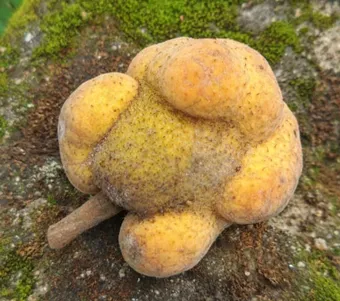
Artocarpus lacucha Buch.-Ham. ex D. Don
Hindi: Translation
डाउ
Semantic Domain
Plants, trees and other vegetation
Health, well-being and sickness
Notes
The plant is valued by the Birhor community mainly for its edible fruit, which is often gathered from the wild. It also supplies medicine and various materials for local use.
- Fruit: The fruits are eaten raw (berel) and have a pleasant sub-acid flavour.
- Flower: They boil and cook and eat the flowers (baha).
- Seed: They roast it and eat the seeds as a snack.
Medicinal values for: Skin diseases, headache, boils, pimples, wounds, cuts
- Bark: The bark (baklaʔ) is sometimes chewed (togoʧ) as a substitute for betel nut (pan kʰili).
- The bark (baklaʔ) after being soaked in water (daʔ-re lohotekana) for some time, when it becomes soft, is used as a poultice for treating skin ailments.
- The bark (baklaʔ) is also considered a cure for headache.
- Tree sap and juice (ros or rasa) of the bark (baklaʔ) is applied externally to boils, pimples, cuts and wounds.
Other uses. Wood: The wood (sahan) is also used to make planks (dirkʰa) which are used for different purposes.
Santali: dahu
ID
10